An everyday source of lead exposure has disappeared worldwide: leaded petrol for cars has no longer been sold since July 2021. This success came through technical changes and a long-standing international partnership. It removes neither existing contamination nor every source of lead, but shows how an avoidable environmental burden can be systematically brought to an end.
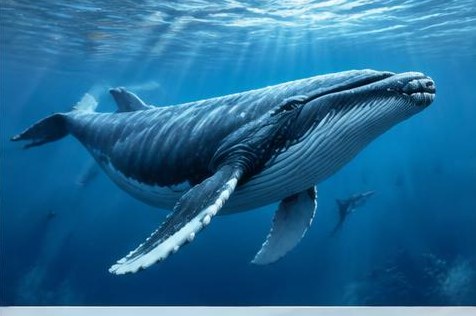
Several humpback whale populations have recovered significantly since intensive hunting ended. In 2016, the US ocean agency NOAA was able to remove nine of fourteen distinct populations from its special threatened-species list. This was a significant milestone, but not a global all-clear: other populations remained threatened, and new pressures still need to be monitored.
Electric cars have long been more than a small niche market. For 2024, the International Energy Agency documents more than 17 million sales and a growing vehicle fleet. Particularly telling is the oil consumption already displaced. At the same time, raw material requirements, the source of electricity and the still-large number of conventional cars remain important parts of an honest environmental assessment.
The expansion of renewable electricity generation reached a documented record in 2024. Worldwide, 585 gigawatts of capacity were added, reports the International Renewable Energy Agency. The figures show technological and economic momentum. They do not, however, mean that an equivalent amount of electricity was generated or that all regions of the world benefit equally from the expansion.
Daily AI research begins at 6 am Berlin time. Up to three recent stories per topic are summarised in our own words and linked to original sources. No politics.
Friday, 30 October 2026
AI illustrationMusic & Culture
Youth Mariachi musicians bring music to botanical garden
The youth group Mariachi Mestizo performed at a botanical garden, showcasing the emotional significance and cultural importance of their traditional music.
Melissa Etheridge captivates with acoustic performance
Rock legend Melissa Etheridge delivered an uplifting, stripped-down acoustic performance at the Lobero Theatre, featuring both classic hits and tracks from her new album, "Rise."
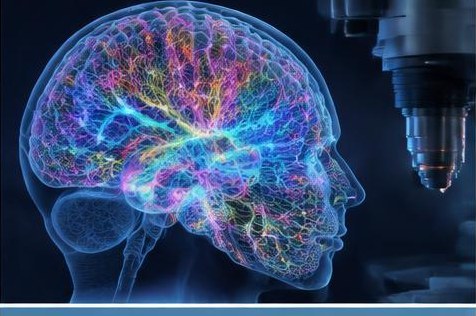
A research team at Rockefeller University has developed TrUDI technology, which increases fluorescence photon yield by 250-fold. This enables scientists to observe cellular processes deeper within the brain with unprecedented precision.
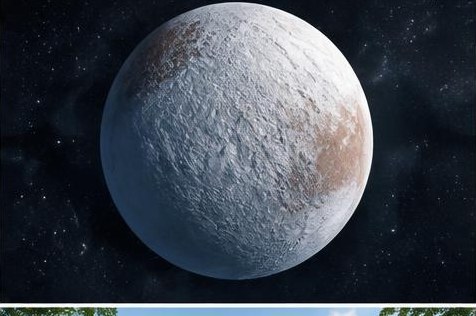
New discovery of a possible dwarf planet in the outer solar system
Astronomers have identified object 2026 ED138 using Vera C. Rubin Observatory data, marking it as a potential dwarf planet beyond Neptune. The discovery highlights the effectiveness of modern software in detecting distant objects.
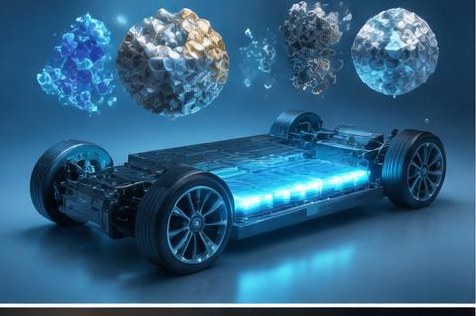
Breakthrough in developing more efficient electric vehicle batteries
Scientists have adapted precision manufacturing techniques from the semiconductor industry to improve the lifespan and performance of anode-free battery systems. This could lead to lighter, more durable batteries with increased driving range.
OpenAI introduces new privacy features for AI businesses
OpenAI has launched new security and privacy options that give businesses greater control over their data when using advanced AI models. New features include options for privacy-focused data processing with no data retention.
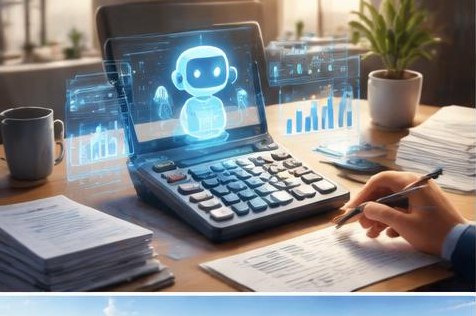
Boosting effectiveness through AI-powered automation
Experts emphasize that AI-powered automation acts as a force multiplier that assists employees in their work. The goal is to increase productivity and effectiveness across various sectors through intelligent tools.
Artificial intelligence is increasingly changing accounting workflows by making tasks more efficient. Professionals are using the technology to streamline their processes without changing the core nature of their work.
Successful completion of the Koruson 2 renewable energy cluster
A new 520 MW large-scale renewable energy project has been successfully completed in South Africa. This facility marks a significant step for local power generation using clean energy sources.
Novel semiconductor improves solar panel efficiency
Scientists at the University of Oxford have identified a new semiconductor material that enhances light absorption while minimizing energy loss. This discovery could pave the way for higher-performing and more efficient solar technologies.
Global solar energy expansion hits a positive tipping point
Global solar capacity is currently doubling every three years as the technology moves beyond the experimental stage into the mainstream. Experts view this rapid scaling as a critical turning point for global climate action.
Student Wins Space Innovation Challenge for Debris Avoidance
Adeetya Uppal won the Viasat Space for Good India Challenge with 'DRISHTI,' an AI system that detects space debris and calculates satellite maneuvers to avoid collisions. The technology aims to enhance orbital infrastructure safety by reducing response times to mere seconds.
New Institute for Pediatric Innovation Launched in Seattle
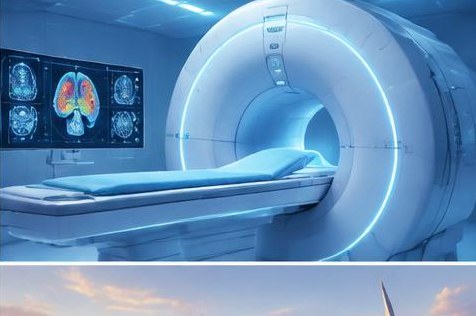
Seattle Children's Hospital has launched a new institute dedicated to developing advanced medical technologies for children. The initiative focuses on AI-powered care tools, genetic analysis, and innovative medical devices to improve pediatric treatment.
Perimeter Medicals AI Imaging Device Wins Recognition
Perimeter’s AI-powered device, Claire, which assists during breast cancer surgeries, was named a TIME Best Invention of 2026. It helps surgeons precisely identify potentially cancerous tissue while a patient is still in the operating room.
Possible Discovery of a New Dwarf Planet Beyond Pluto
Astronomers have identified a new dwarf planet candidate named 2026 ED138 using the Vera C. Rubin Observatory. This notable find is located in the outer reaches of our solar system.
Successful Launch of New Indian Navigation Satellite
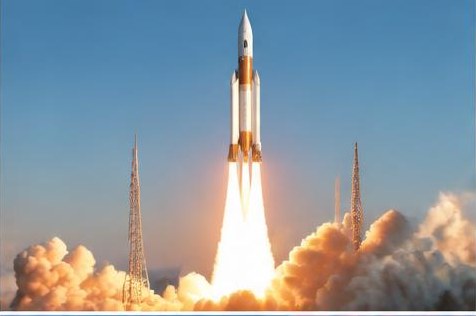
India successfully launched the NVS-03 navigation satellite into orbit using a GSLV rocket. This marks another significant advancement for the nation's satellite-based navigation program.
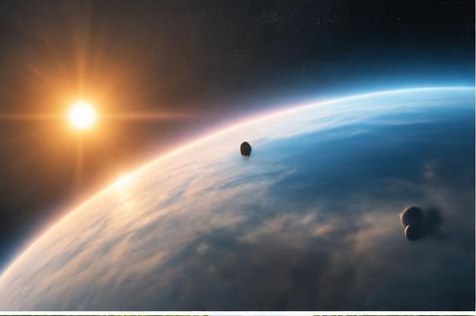
Stellar System Mystery Solved: Focus Shifts to Habitable Exoplanets
Researchers solved a 170-year-old mystery, determining that a stellar wobble was caused by stellar activity rather than a giant planet. This opens the door for searching for smaller, potentially habitable worlds nearby.