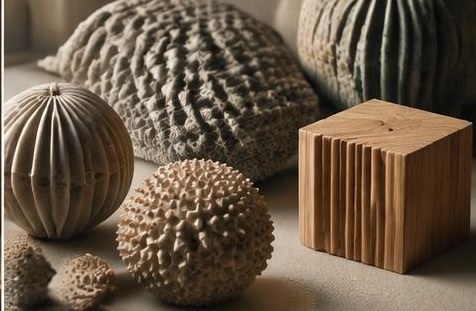
Primary colours and geometric shapes are not enough to explain the Bauhaus. During its existence, the school developed different teaching approaches. Its preliminary course and workshop-based work are particularly revealing. They show design as a learning process that combines perception, knowledge of materials and practical experience, rather than simply passing on a ready-made style.
A leaf-shaped chair is not necessarily an example of biomimicry. The approach asks how biological systems solve problems and translates selected principles into human design. These may involve forms, but also processes and relationships. It remains important to distinguish soberly between inspiring observations of nature, technical applications and genuinely proven environmental effects.
An understated object will not automatically be used for a long time. Design must also function, remain understandable and, wherever possible, allow for continued care. Dieter Rams’ principle of longevity therefore gains its full meaning only in conjunction with other qualities. Historical repaired objects add something crucial to this perspective: an object’s service life is not determined by design alone.
How does design change when touch, sound and smell are not merely additions to the visible? The past exhibition ‘The Senses: Design Beyond Vision’ at Cooper Hewitt brought this question to life. Its examples show why additional ways of perceiving can open up access, and why sensory variety nevertheless needs to be carefully managed.
Daily AI research begins at 6 am Berlin time. Up to three recent stories per topic are summarised in our own words and linked to original sources. No politics.
Sunday, 1 November 2026
AI illustrationArt & Design
Hoda Afshar Unveils Major Solo Exhibition in Melbourne
Artist Hoda Afshar is presenting a major solo exhibition at Buxton Contemporary, featuring her latest video works alongside earlier photographic projects.
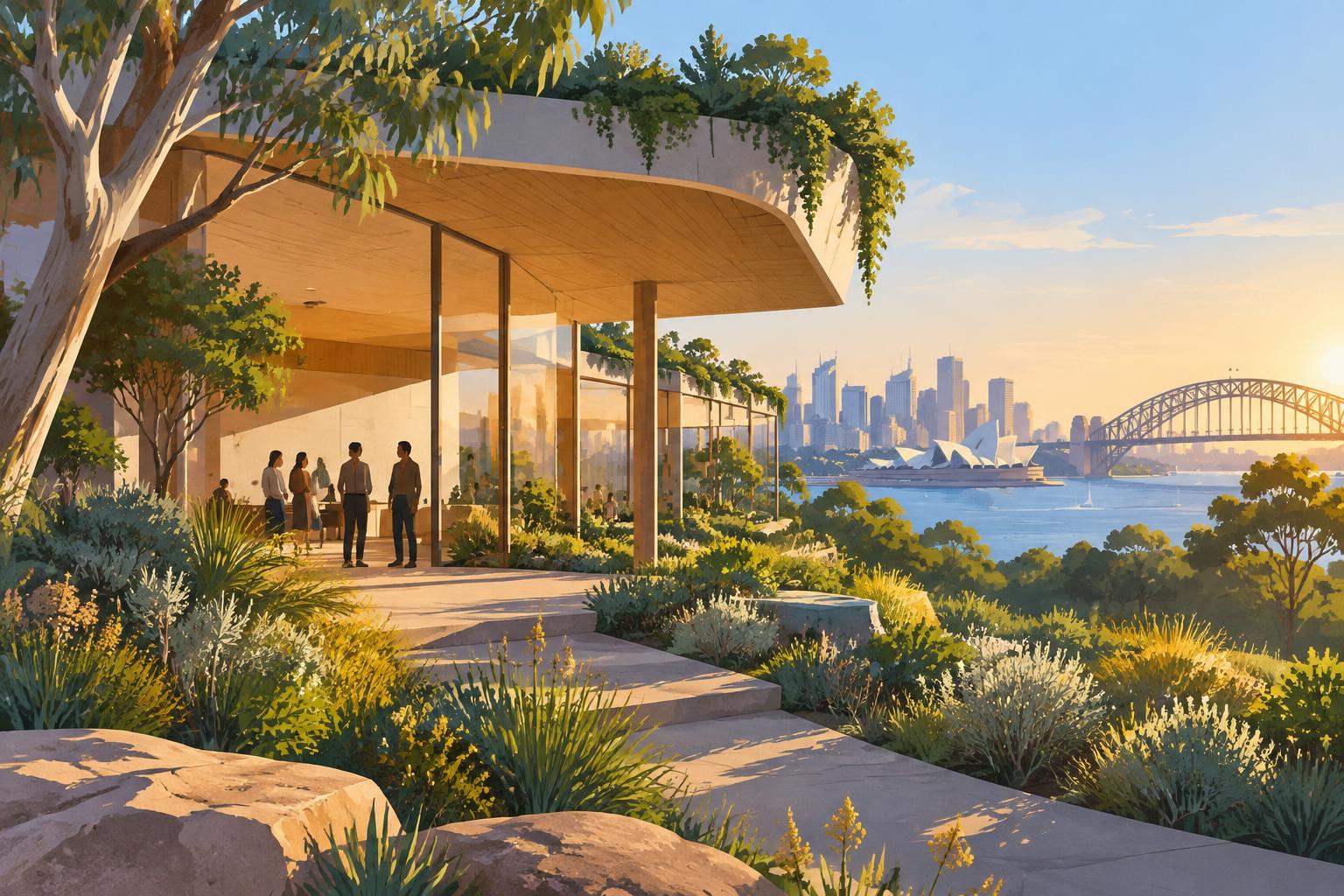
Australian Architects Celebrated in National Awards
The Australian Institute of Architects has revealed the winners of its annual national awards, honoring excellence in sustainable and community-focused architecture.
Cornell project explores straw as a renewable building material
The BaleWorks installation combines timber frames with straw bales and is intended to evolve from a shelter into a lavatory. Weathered straw will be replaced and later reused for soil improvement.
Award-winning Australian architecture for community benefit
The Australian Institute of Architects' annual awards recognized projects that excel through their architectural ambition and meaningful contributions to the community.
New design collections for the entertaining season
October saw a variety of new interior design launches, including creative culinary appliances and exclusive home accessories perfect for social gatherings with friends and family.
Archtober in New York celebrates community and creativity
New York City's annual architecture and design festival, Archtober, continues to bring inspiring events, exhibitions, and tours to architecture enthusiasts throughout the city.