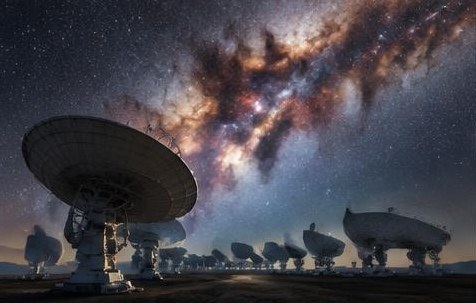
Star-forming regions are often dark in visible light because dust blocks the view. The ALMA observatory studies their millimetre and submillimetre radiation. Its linked antennas reveal cold dust and molecular gas. This makes it possible to explore the regions where stars form and where the raw materials for new planets gather around young stars.
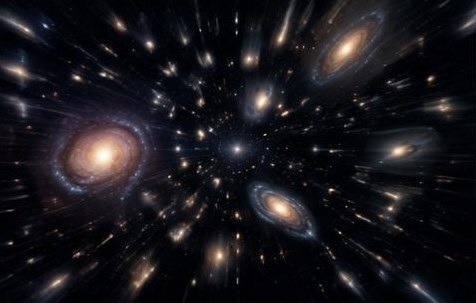
Observations indicate that the expansion of the universe is not simply slowing down all the time. On large scales, expansion has accelerated in later cosmic epochs. Dark energy is the term for a possible cause within the standard model. Its nature remains an open question and is being investigated using supernovae, galaxy maps and gravitational lensing.
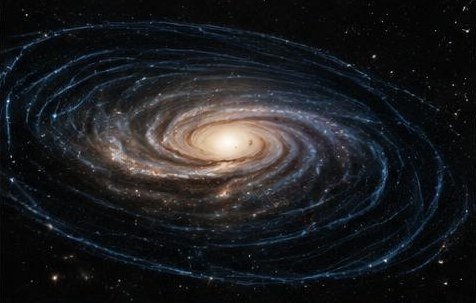
Dark matter is the name for an as yet unidentified component of matter whose gravitational effects are visible in many places. The movements of galaxies, gravitational lensing and cosmic structures cannot be accounted for by the observed ordinary matter alone. This does not mean that its particles have already been found. Well-measured effects and an unknown nature are two different statements.
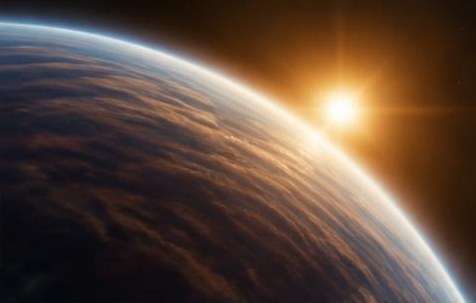
An Earth-sized planet is not automatically a second Earth. Its atmosphere, radiation environment and evolutionary history also matter when assessing potentially life-friendly conditions. Telescopes can study selected gases or a planet’s thermal radiation. Such measurements are valuable, but neither a single molecule nor a location in the habitable zone proves habitability or life.
Daily AI research begins at 6 am Berlin time. Up to three recent stories per topic are summarised in our own words and linked to original sources. No politics.
Sunday, 1 November 2026
AI illustrationSpace
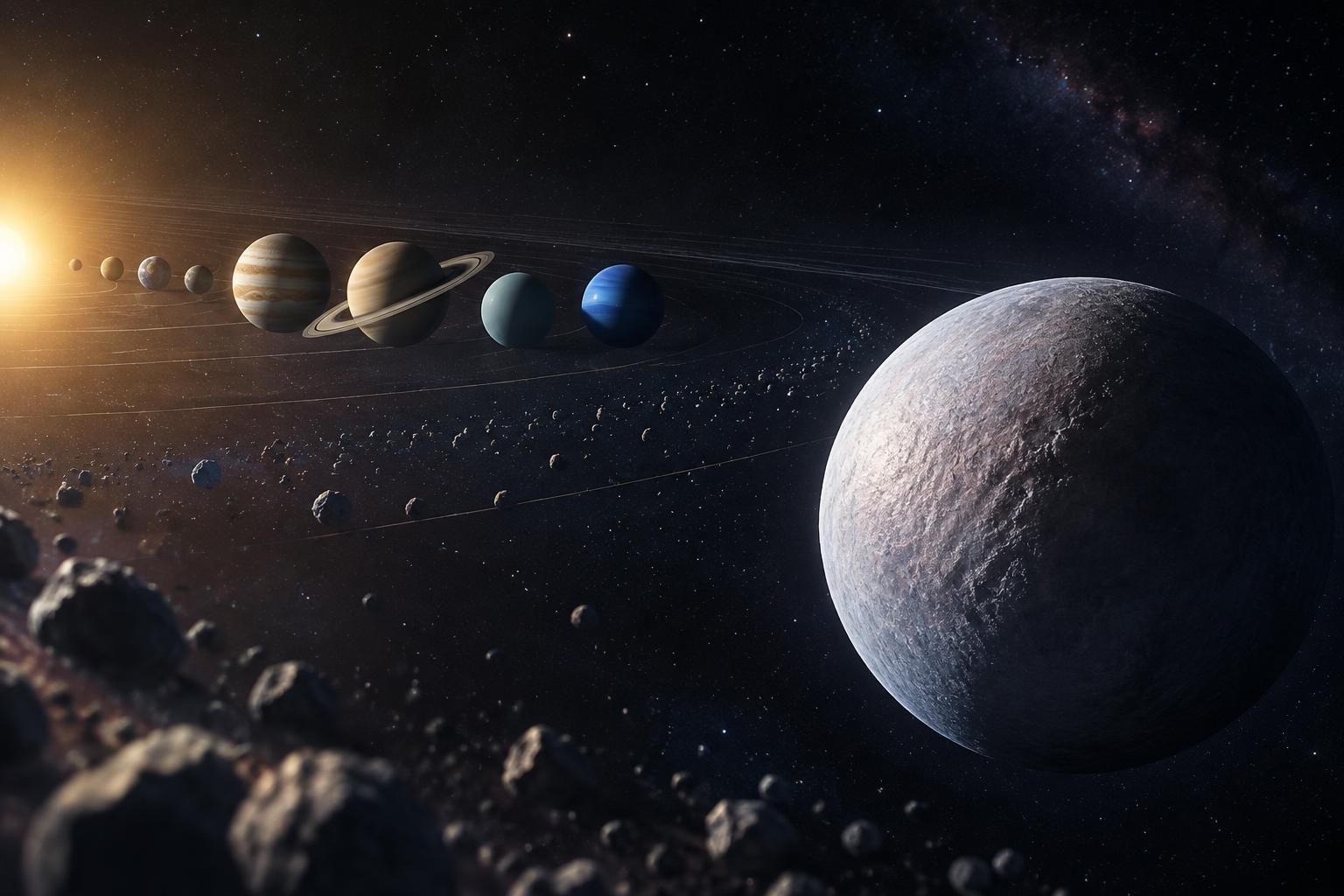
Vera C. Rubin Observatory discovers new dwarf planet candidate
The recently launched Rubin Observatory has identified a large, bright object beyond Neptune's orbit that may be a potential sixth dwarf planet in our solar system.
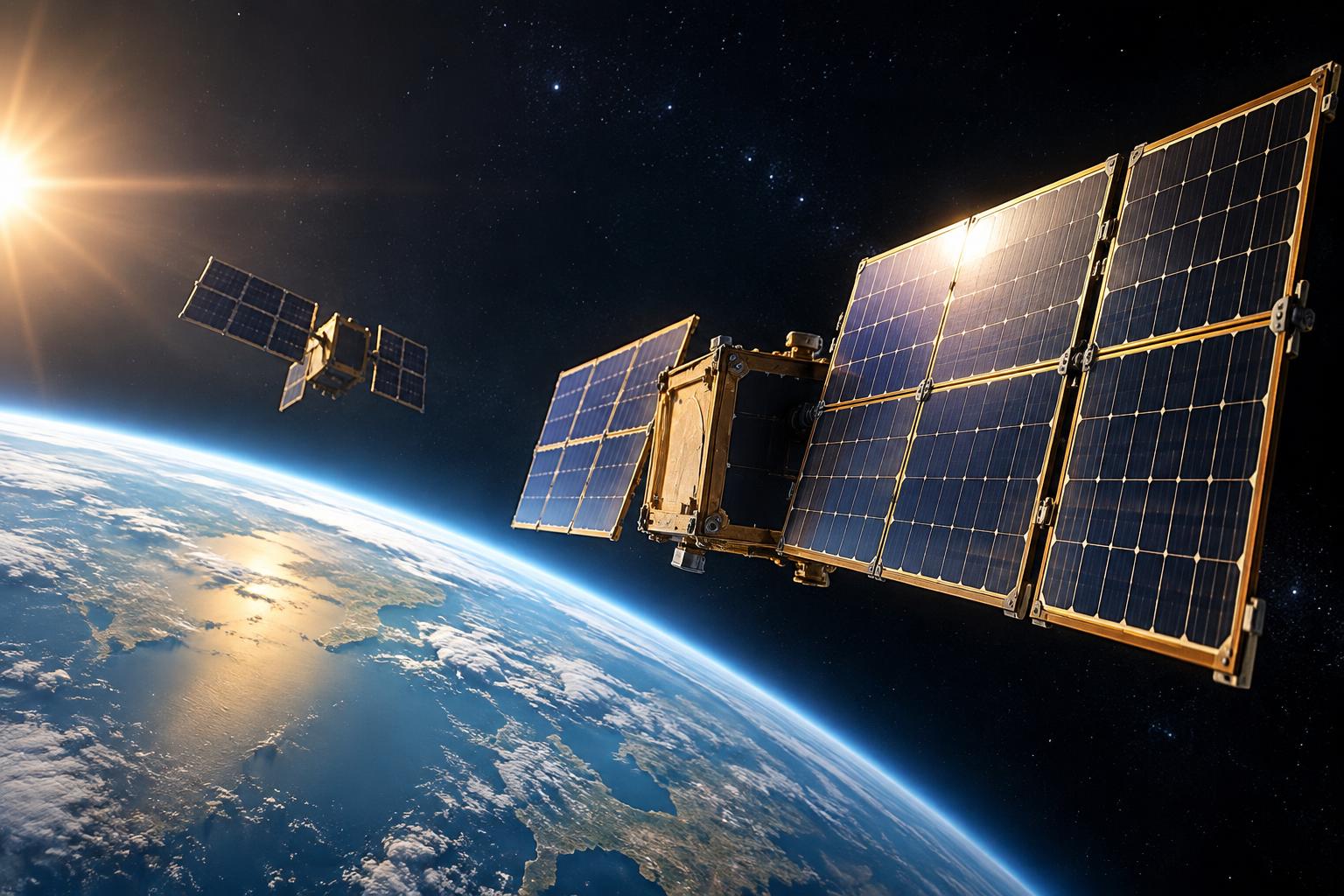
Two companies plan in-orbit tests of next-generation solar cells
Flexell Space and Satoro agreed to conduct two demonstration missions for next-generation space solar cells, planned for 2027 and 2028. The tests will assess performance and reliability in orbit.
Possible Discovery of a New Dwarf Planet Beyond Pluto
Astronomers have identified a new dwarf planet candidate named 2026 ED138 using the Vera C. Rubin Observatory. This notable find is located in the outer reaches of our solar system.
Successful Launch of New Indian Navigation Satellite
India successfully launched the NVS-03 navigation satellite into orbit using a GSLV rocket. This marks another significant advancement for the nation's satellite-based navigation program.
Stellar System Mystery Solved: Focus Shifts to Habitable Exoplanets
Researchers solved a 170-year-old mystery, determining that a stellar wobble was caused by stellar activity rather than a giant planet. This opens the door for searching for smaller, potentially habitable worlds nearby.