Put knowledge into perspective, understand new ideas and see the world through fresh eyes: explore our in-depth features. Every article lists its sources. The features are available in German and English and are not breaking-news reports.
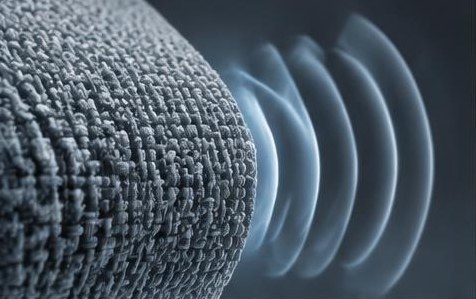
Textiles can not only dampen sound but also detect it. A research team at MIT developed fabric containing a special piezoelectric fibre that converts mechanical vibrations into electrical signals. This does not produce an invisible mass-produced microphone for every garment, but it does offer a remarkable approach to incorporating sensors into familiar textile manufacturing processes and distributing them across the fabric.
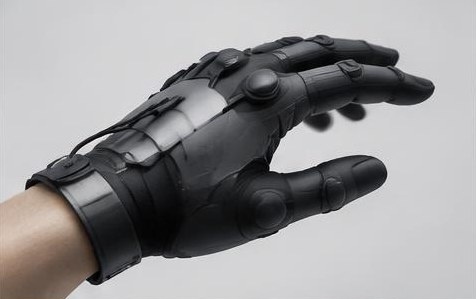
Anyone reaching for a cup in a virtual scene normally feels no resistance. DextrES addresses this gap: flexible metal strips are electrostatically braked against one another, limiting finger movement. The joint research approach from EPFL and ETH Zurich demonstrates tangible grasping with little mass, but remains far from a complete simulation of real hands.
Many electrical devices unintentionally emit electromagnetic interference during operation. EM-Sense investigates whether these signals can be detected through the body when a device is touched. A watch-format research prototype distinguished between various objects without additional tags on the devices. This is a specialised sensing technique, not a general ability to identify every object touched reliably.
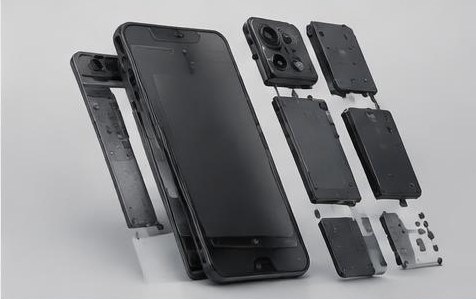
A smartphone already consists of many parts. What matters is whether those parts remain accessible and replaceable later on. With the Fairphone 5, repair instructions and separately available components are part of the product concept. Its technical distinction lies less in any single new material than in a device architecture that takes typical repairs into account from the design stage.
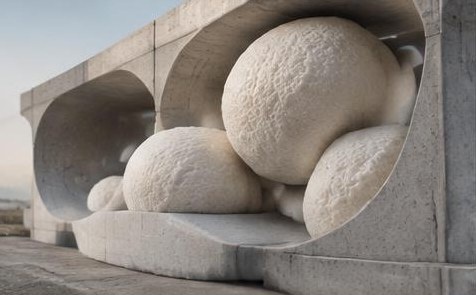
Complex concrete components need not only a good design but also a mould that can be manufactured. The ETH project FoamWork investigates robotically printed mineral foam as formwork. The invention therefore addresses the stage before the actual casting. A documented slab prototype demonstrates the principle without yet providing a universally approved construction method for arbitrary buildings.
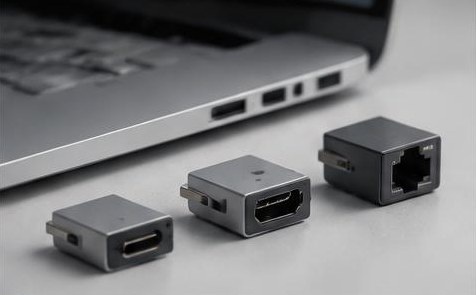
On many laptops, the choice of ports is fixed for their entire lifespan. Framework, by contrast, treats some of this equipment as interchangeable modules. Small Expansion Cards fit into purpose-built bays and can be combined as needed. Unlike many research projects, this is a marketed product concept with documented installation and removal procedures.
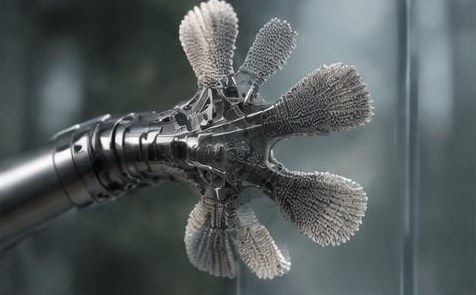
Large, smooth surfaces are often difficult to grasp with fingers. Stanford researchers are therefore investigating adhesive structures modelled on gecko toes. Microscopic surface features and a specific loading direction create a controllable grip. This is not a universal adhesive film, but a family of carefully designed research mechanisms whose performance depends heavily on contact, surface properties and an even distribution of forces.
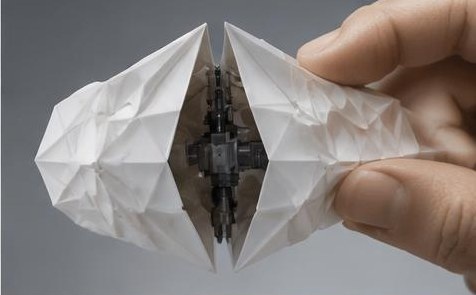
A vibration can signal a notification, but can hardly convey the direction of a touch. Haptigami therefore investigates a compact fingertip interface that also generates pressure and lateral forces. The EPFL development uses compliant transmission mechanisms within an origami structure. It is a research prototype with measured performance for differentiated feedback, not a ready-to-buy glove for arbitrary virtual worlds.
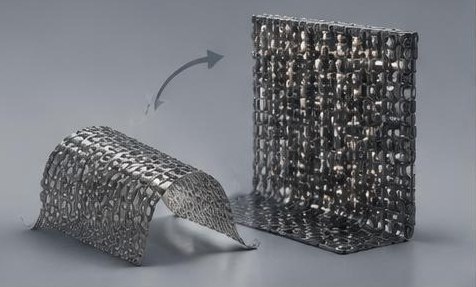
Chain mail is flexible even though its individual links are hard. Researchers at Caltech and JPL used this contrast to create a structured material with variable bending stiffness. Under pressure, the elements interlock more strongly. The published development demonstrates on samples how geometry can switch mechanical properties; proposed applications remain separate development tasks.
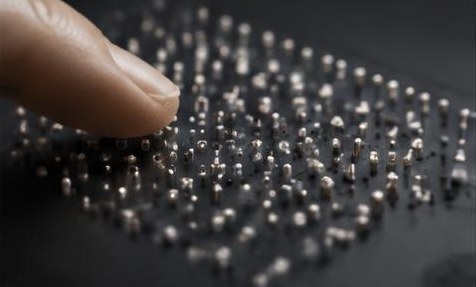
A single braille line can make text accessible, but can represent spatial relationships only to a limited extent. Monarch combines multiple lines with an area for tactile graphics. Developed by HumanWare with partner organisations, the device is offered as a product. It shows how digital accessibility can extend beyond speech output without removing the need to prepare diagrams and learning materials carefully.
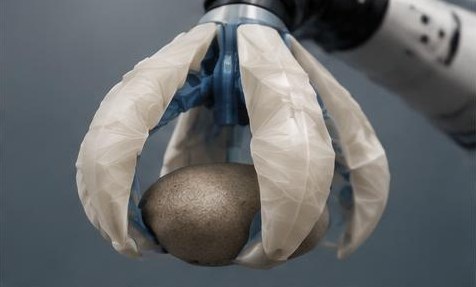
A robot does not have to replicate a human hand to pick up very different things. Researchers at MIT and Harvard developed a gripper whose folded shell encloses objects. The research device shows how geometry and soft materials can work together. Its impressive lifting trials, however, are not yet evidence of a universally applicable packing robot.
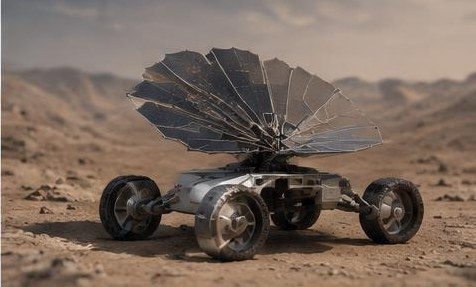
A large rover can carry valuable instruments, but cannot fit beneath every rock overhang. PUFFER, developed at the Jet Propulsion Laboratory, therefore explores a different division of labour: small folding robots as forward scouts. The devices were tested on Earth. Their association with lunar or Mars missions remains an application concept in the sources described.
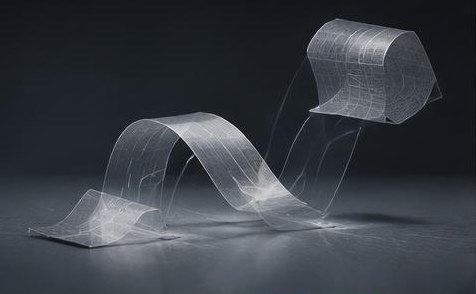
When heated, a thin piece of polymer can do more than deform slowly: it can suddenly leap. Researchers at the University of Colorado Boulder and Caltech demonstrated this using specially structured liquid crystal elastomers. The movement exploits a mechanical instability. The result is a materials experiment with potential implications for soft actuators, not yet an autonomously hopping miniature robot.
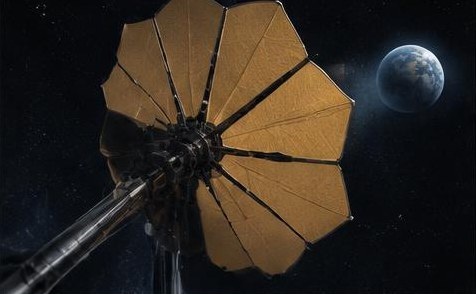
A large shade could block a star’s light so that a telescope can detect fainter companions. But such a structure must first be stowed compactly. NASA researchers tested an origami-inspired optical shield for this purpose. The documented ten-metre test article is a ground-based technology demonstrator and must not be confused with a starshade already flying in space.
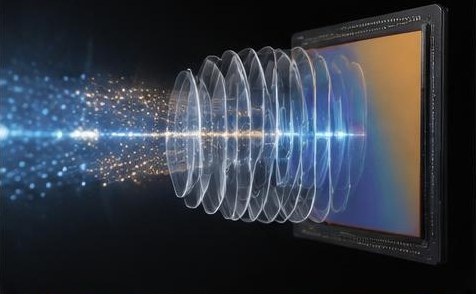
More pixels are of interest not only in ordinary cameras. A team at NIST developed a superconducting camera with 400,000 pixels that can detect individual photons. Its readout architecture is also part of the innovation. The research device requires extremely low temperatures, placing it in a different class of equipment from commercially available photographic or surveillance cameras.
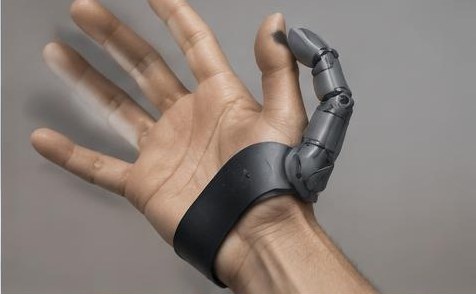
The Third Thumb does not replace a missing finger; it augments an existing hand. Developed by Dani Clode, the robotic extension sits opposite the natural thumb and is controlled through pressure sensors on the feet. Cambridge researchers investigated how different people cope with it. The project is an experiment in motor augmentation, not a promise of effortless extra dexterity.
An ordinary touch switch often answers only a yes-or-no question. Touché, by contrast, investigates how different hand positions and forms of contact can be distinguished electrically. The research project scans capacitive properties across several frequencies. This allows everyday objects and liquids to become experimental input surfaces, without yet amounting to a robust universal solution for every surface.
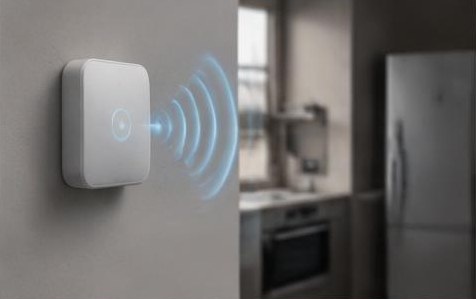
Touchless operation often leaves it unclear whether an input has actually been registered. UltraButton therefore combines distance sensing with light, sound and focused ultrasound. The latter produces feedback on the hand even though it is not touching a solid button. The published development is a tested prototype, not a finished control product available at the stated experimental cost.
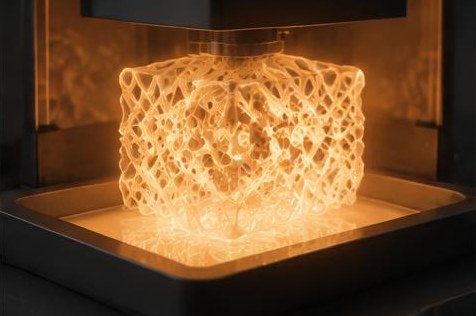
Many 3D printers build an object layer by layer. Computed Axial Lithography takes a different approach: changing light projections strike a rotating container of photosensitive material. Their effects accumulate spatially to produce the desired shape. The research published in 2019 demonstrates an alternative manufacturing principle, not a universal replacement for all layer-based processes.
Harvesting water from air does not always require an actively cooled surface. A research team investigated a collector containing a metal–organic framework material that binds water vapour and releases it again with the help of solar heat. Trials in Berkeley and Death Valley demonstrate the principle under real-world conditions. However, the documented quantities require careful interpretation.