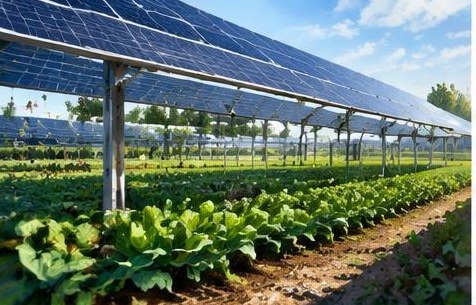
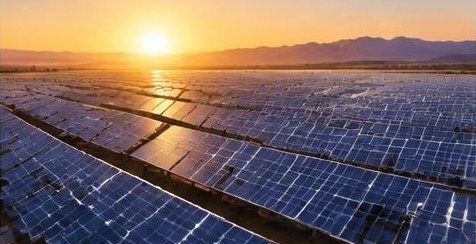
Agrivoltaics combines agricultural use with solar electricity generation. This can ease competition for land, but requires more than elevated panels. Shading, machinery access and water distribution must suit the crop concerned. Research and practical experience reveal different designs and potential benefits, but also clear limits to blanket promises of yields across widely differing locations and farms.
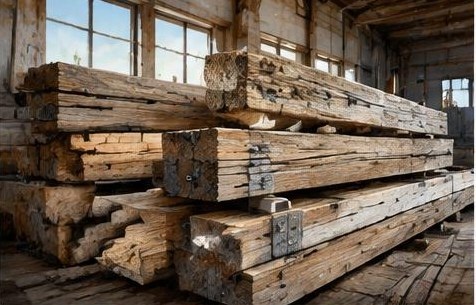
Much of the attention in sustainable construction focuses on new materials. Yet an earlier question is often decisive: what actually needs to be newly manufactured? Retaining suitable existing building fabric and reusing components can avoid demand for materials. This requires careful assessments of existing structures, appropriate planning and a realistic approach to technical and organisational limits.
Timber, plant fibres and other bio-based materials can complement or replace conventional building materials in suitable applications. However, their renewable origins do not guarantee a good overall environmental balance. Raw material sourcing, processing, durability and what happens at the end of use are decisive. It is therefore particularly important to relate material properties and environmental impacts to the specific construction task rather than to a general green label.
Soils store water and carbon, support plants and filter substances. Anyone seeking to improve their quality must consider these functions together. More organic matter can help, but does not solve every problem. Compaction, erosion and nutrient imbalances each call for appropriate measures. Progress therefore comes through long-term, site-specific management rather than a single universal recipe for soil.
Daily AI research begins at 6 am Berlin time. Up to three recent stories per topic are summarised in our own words and linked to original sources. No politics.
Sunday, 1 November 2026
AI illustrationEnvironment
Xcel Energy launches major renewable energy investment plan
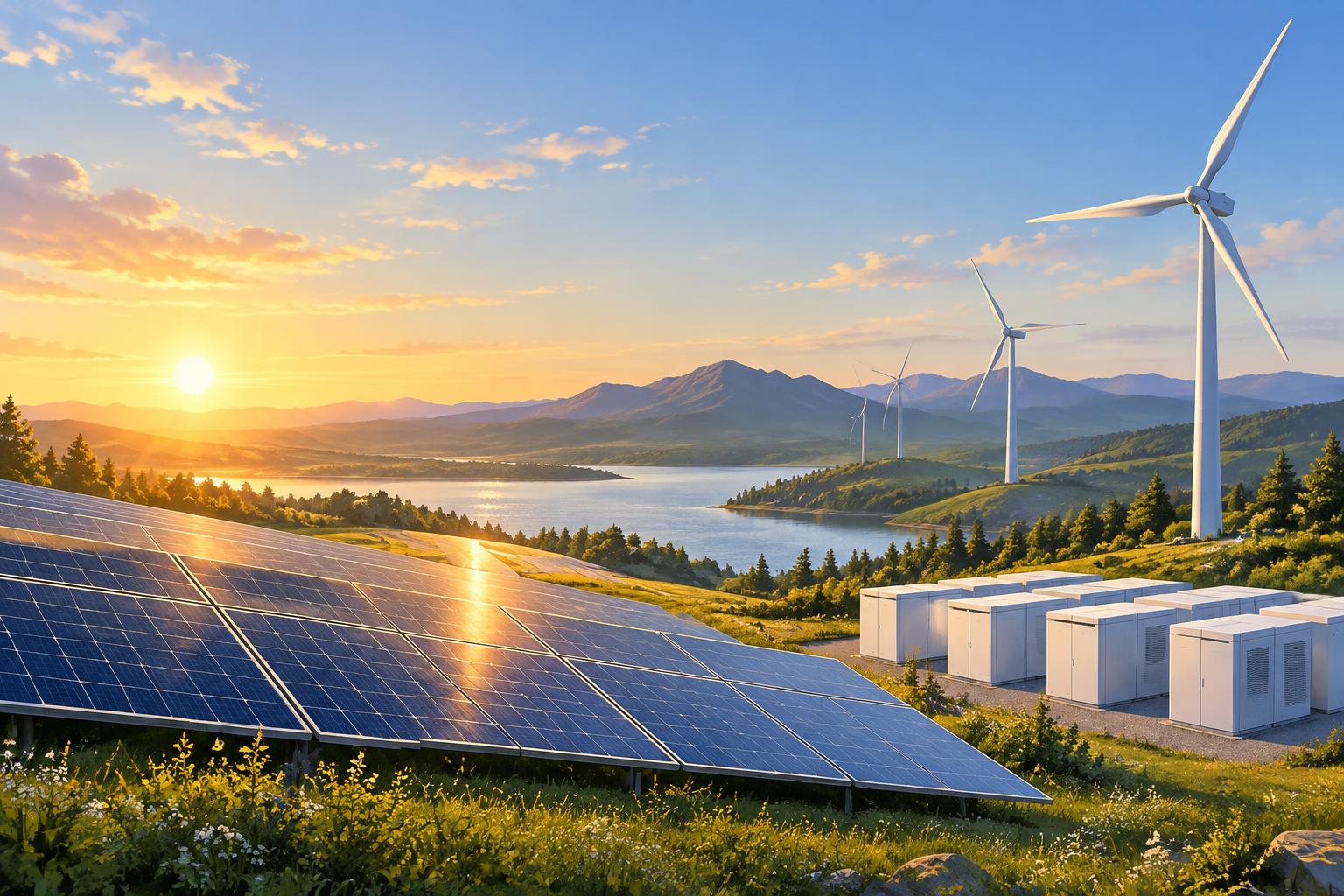
Xcel Energy has unveiled a 70 billion dollar, five-year capital plan focused on expanding renewable generation and energy storage capacity. Nearly three-fourths of the company's planned new energy capacity will come from renewable sources.
Honda proving ground in Hokkaido receives biodiversity certification
Most of Honda’s Takasu Proving Ground has been certified as a nationally recognized sustainably managed natural site. Honda says the site supports both research and development and biodiversity conservation.
Eco Wave Power receives order for wave-energy site assessment
Bharat Petroleum issued Eco Wave Power an order for a site assessment at a Mumbai terminal. The study will evaluate the technical feasibility of a planned wave-energy pilot.
Oxford research identifies a potential route to more efficient solar cells
A Nature study describes bismuth sulfide, which can absorb light strongly while retaining electrical charges for longer. The mechanism could inform future solar-cell designs, though practical efficiency gains have not yet been demonstrated.
Successful completion of the Koruson 2 renewable energy cluster
A new 520 MW large-scale renewable energy project has been successfully completed in South Africa. This facility marks a significant step for local power generation using clean energy sources.
Novel semiconductor improves solar panel efficiency
Scientists at the University of Oxford have identified a new semiconductor material that enhances light absorption while minimizing energy loss. This discovery could pave the way for higher-performing and more efficient solar technologies.
Global solar energy expansion hits a positive tipping point
Global solar capacity is currently doubling every three years as the technology moves beyond the experimental stage into the mainstream. Experts view this rapid scaling as a critical turning point for global climate action.