Put knowledge into perspective, understand new ideas and see the world through fresh eyes: explore our in-depth features. Every article lists its sources. The features are available in German and English and are not breaking-news reports.
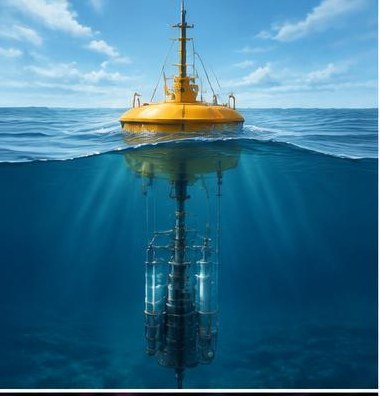
Research vessels can only ever reach a small part of the sea. Argo floats complement them with repeated autonomous dives and vertical measurement profiles. Temperature, conductivity and pressure allow comparisons of the ocean’s internal structure. The principle of global observation is established, but individual profiles remain snapshots whose quality and spatial representativeness must be checked.
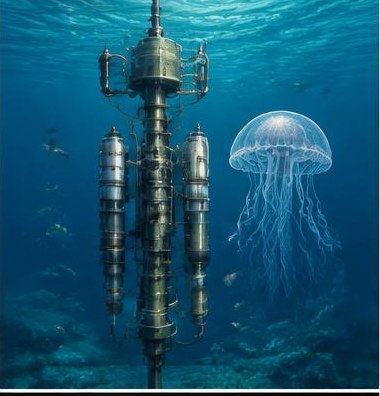
Oxygen, nitrate, pH and optical signals broaden the view provided by autonomous ocean buoys. Such measurements can show how biological activity and chemical conditions are linked. They do not, however, simply count every organism. Between a sensor signal and an ecological conclusion lie calibrations, biogeochemical cycles and models whose assumptions must be carefully disclosed and independently checked.
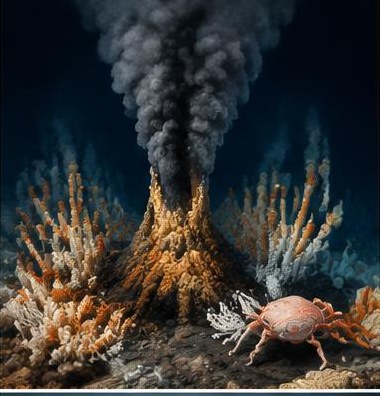
At hydrothermal vents and cold seeps, chemical energy can sustain local food webs. Microorganisms use suitable reactions to build biomass. This does not make these communities independent of energy or completely separate from the rest of the ocean. What matters are flows of substances, the supply of reactants and, often, close partnerships between microbes and animals.
Volunteer observations can cover large areas and long periods. Yet their sheer volume is not enough to support scientific conclusions. Projects need transparent protocols, information on observation effort and procedures for checking unusual reports. Birdwatching provides an example of how personal experience of nature and systematic data collection can work together without concealing uncertainty.
Research data can be freely downloadable yet practically unusable. The FAIR principles therefore focus on findability, managed access, interoperability and reuse. They do not inherently require unrestricted downloads. At their heart is a clear, traceable description that helps people and computer systems find and interpret data correctly and reuse them under clear conditions.
Conventional light microscopy cannot distinguish closely neighbouring structures with unlimited precision. Super-resolution methods circumvent this limit by deliberately controlling the light emitted by labelled molecules. They do not violate any laws of optics. Their images, however, are produced under particular conditions — and initially show the distribution of the labels, not an unfiltered view of the entire cell.
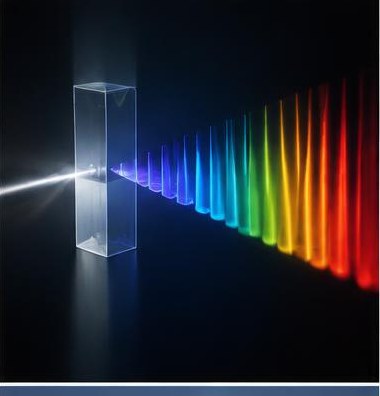
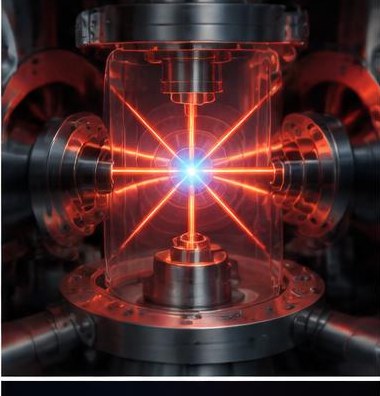
Light oscillates too quickly for ordinary electronics to count its individual waves directly. Optical frequency combs bridge this gap. Their regularly spaced spectrum connects laser light with measurable radio frequencies. The principle helps not only atomic clocks, but also spectroscopy and precise distance measurement — under very different experimental conditions and requirements in each case.
Catalysts do not act independently of their surroundings. Incorporating active components into a gel changes accessibility, substance transport and mechanical cohesion. This opens up interesting possibilities for electrochemical reactions. A larger surface area or a higher current in the laboratory, however, does not yet prove a superior technology: comparison conditions and long-term behaviour determine how much can be concluded.
Hydrogels combine large quantities of water with a three-dimensional polymer network. Their properties arise not from water content alone, but from cross-linking, chemical groups and mobile ions. This makes them interesting for soft engineering components and electrochemical systems. The performance actually achievable, however, only becomes clear under appropriate loading and environmental conditions.
The kilogram as a unit no longer depends on a single metal object. Its definition is based on a fixed value of the Planck constant. A Kibble balance puts this abstract definition into experimental practice. It links gravitational force with electrical quantities — and shows why an exact definition does not mean a measurement without uncertainty.
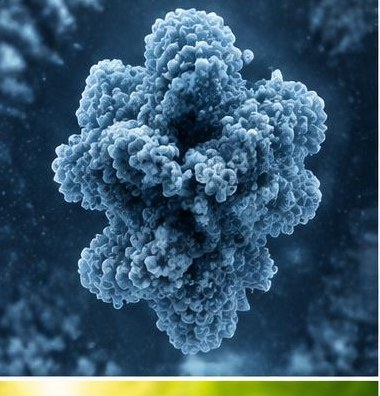
Cryo-electron microscopy makes the three-dimensional architecture of biological molecules accessible without requiring a crystal for every sample. Extremely rapid cooling traps them in thin, glass-like ice. A three-dimensional reconstruction emerges from many weak individual images. Between the raw image and the structural model, however, lie numerous selection decisions, checks and methodological limitations.
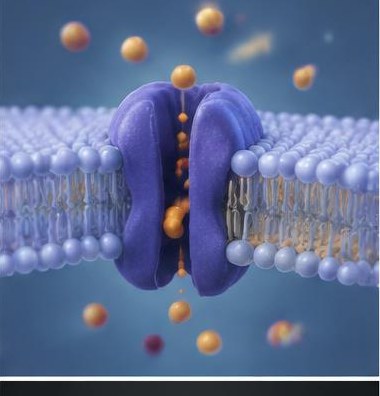
Cell membranes separate chemical compartments, but must not be completely impermeable. Membrane proteins allow selected ions, small molecules and even other proteins to cross. Yet their operation cannot be fully understood from structures alone. Only the interplay of spatial models, transport measurements and targeted changes makes plausible mechanisms experimentally robust and comparable.
A freely accessible scholarly article makes knowledge easier to access. Thorough scrutiny often requires more: data, methods, analytical steps and clear documentation. Open science brings these elements together without automatically making every publication correct. Good openness also takes account of data protection, sensitive information and the work required to keep research materials usable over the long term.
An atomic clock does not count orbiting electrons, but uses the precise resonance of an atomic transition. Optical clocks operate at much higher frequencies than conventional caesium clocks. Their performance, however, does not arise solely from ticking faster: controlling external influences, making suitable comparison measurements and providing a traceable account of all uncertainties are crucial.
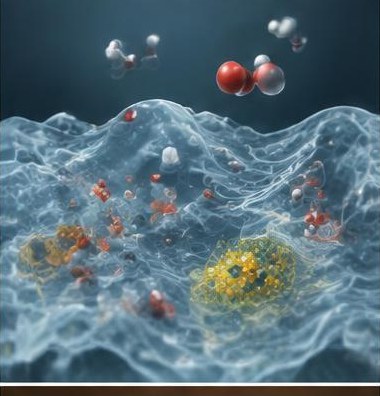
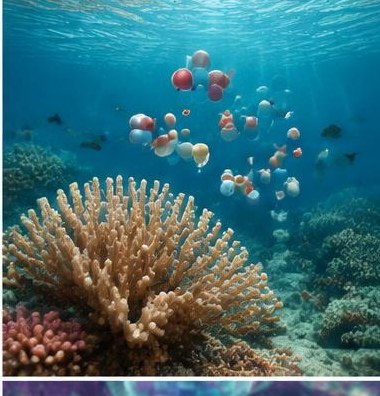
When seawater absorbs additional carbon dioxide, its chemical equilibrium changes. The pH falls, and carbonate availability can decrease. The word acidification does not mean that the entire ocean is already acidic. Biological consequences also depend on temperature, nutrients, life stage and natural fluctuations at the location concerned.
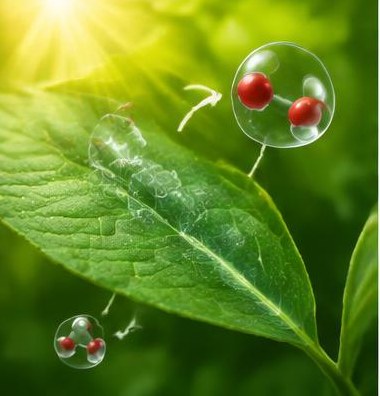
Photosynthesis is more than a shorthand equation involving light, water and carbon dioxide. In photosystem II, light-driven charge separation is coupled to the stepwise oxidation of water. The oxygen produced comes from the water. Researchers use spectroscopy, structural studies and testable chemical models to work out precisely how the intermediate states involved function.
A cut in plastic need not always be permanent. Dynamic bonds can reconnect polymer networks under suitable conditions. Self-healing is not a single, uniform material state, but a measurable restoration of particular properties. Whether a material has actually been usefully repaired is shown not by the closed gap alone, but by its renewed ability to withstand loads.
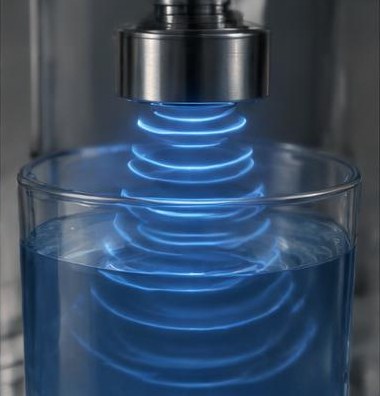
A thermometer does not necessarily need a column of liquid or an electrical resistance. The speed of sound in a gas also carries information about its temperature. Acoustic thermometry uses this relationship for particularly fundamental measurements. It connects the motion of molecules with the definition of the kelvin, but requires precise knowledge of gas composition, geometry and deviations from ideal behaviour.
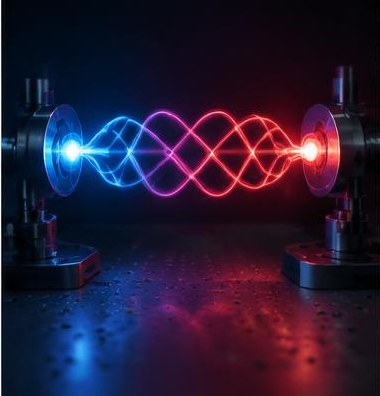
Entangled particles exhibit correlations that cannot be explained by every classical conception of predetermined properties. Bell experiments make this claim quantitatively testable. Their significance lies in statistical measurement patterns, not in a visible connection between individual particles. This opens up new technological possibilities, but permits neither faster-than-light messages nor arbitrary remote control.
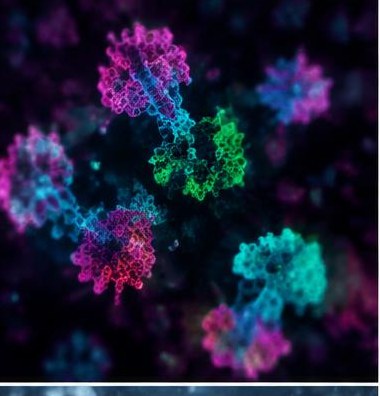
Not every distinct region of a cell has a membrane. Proteins and RNA can organise themselves into concentrated assemblies whose material properties influence biological functions. Such condensates are not, however, invariably liquid droplets. Studying them requires experiments that distinguish composition, exchange and function — and do not hastily apply models to all cellular structures.