
A universe of possibilities
Aevoriana Station
A universe of possibilities · WeltraumFeed · Art & Design
Every day, this feed brings together fresh, easy-to-read news from many fields – from science and space to nature and the environment, art, music and good news. New discoveries are added every morning.
Discovery article
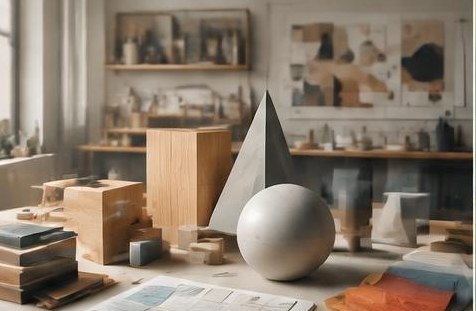
Bauhaus Is More Than a Look: Learning Through Materials and Experiment
Primary colours and geometric shapes are not enough to explain the Bauhaus. During its existence, the school developed different teaching approaches. Its preliminary course and workshop-based work are particularly revealing. They show design as a learning process that combines perception, knowledge of materials and practical experience, rather than simply passing on a ready-made style.
Discovery article
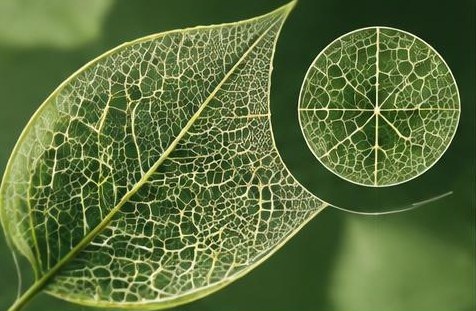
Biomimicry: Learning from Nature, Not Just Mimicking Its Forms
A leaf-shaped chair is not necessarily an example of biomimicry. The approach asks how biological systems solve problems and translates selected principles into human design. These may involve forms, but also processes and relationships. It remains important to distinguish soberly between inspiring observations of nature, technical applications and genuinely proven environmental effects.
Discovery article
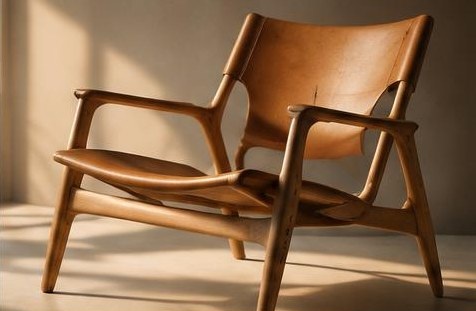
Longevity Is More Than Timelessness: What Makes Good Design Endure
An understated object will not automatically be used for a long time. Design must also function, remain understandable and, wherever possible, allow for continued care. Dieter Rams’ principle of longevity therefore gains its full meaning only in conjunction with other qualities. Historical repaired objects add something crucial to this perspective: an object’s service life is not determined by design alone.
Discovery article
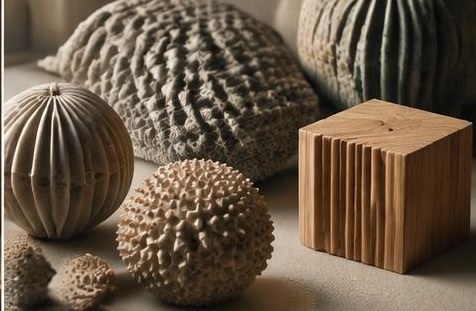
Beyond sight: what multisensory design can achieve
How does design change when touch, sound and smell are not merely additions to the visible? The past exhibition ‘The Senses: Design Beyond Vision’ at Cooper Hewitt brought this question to life. Its examples show why additional ways of perceiving can open up access, and why sensory variety nevertheless needs to be carefully managed.
Discovery article
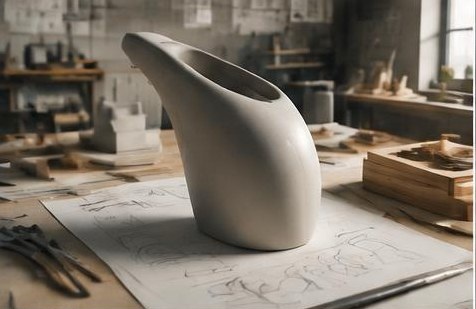
First the Task, Then the Form: Two Routes to Better Design
What should an object actually do? This simple question connects very different approaches to design. Biomimicry’s functional observation of nature and Dieter Rams’ thinking on usefulness do not begin with a fashionable appearance. Read together, they help us define tasks more precisely and test seemingly elegant solutions for their actual usefulness.
Discovery article
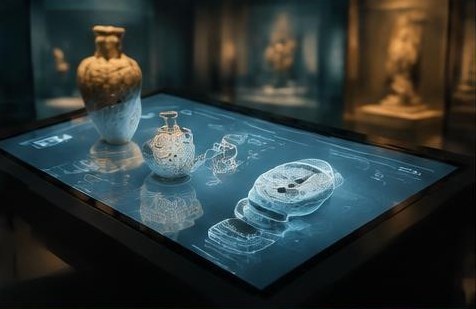
From search result to artwork: reading digital museum collections properly
Digital collections open doors to works that are often not on view in exhibition spaces. Yet a search result is not a complete encounter with an object. The resources offered by the Metropolitan Museum of Art and the Art Institute of Chicago show how images, object data and rights information can be combined into reliable research.
Discovery article
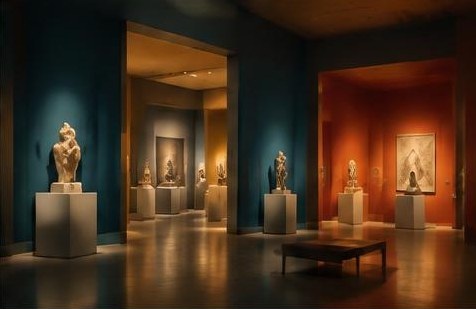
Curated Rather Than Collected: Your Own Themed Journey through Open Museum Collections
Open museum collections invite us to make our own connections between works. Yet a compelling digital selection is more than a series of beautiful images. It needs a question, verifiable object details and a considered approach to rights. Resources from Chicago and the Smithsonian show how these can form a small, responsibly researched themed journey.
Discovery article
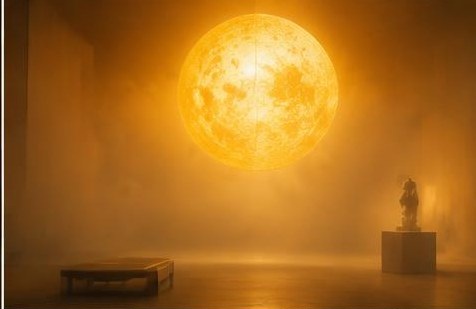
Weather in the Museum: Looking Back at Olafur Eliasson’s ‘The Weather Project’
From 16 October 2003 to 21 March 2004, Tate Modern presented Olafur Eliasson’s ‘The Weather Project’ in its Turbine Hall. The installation took an everyday subject and turned it into an exploration of experience and representation. Its historical context helps us understand light art more precisely, beyond striking remembered images.
Discovery article
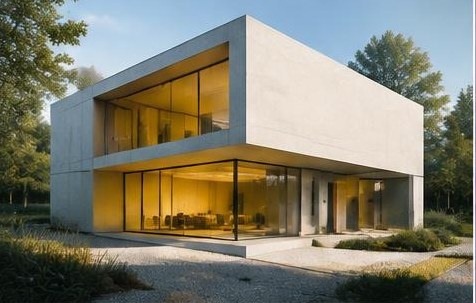
A House as an Argument: Haus am Horn and the Bauhaus Exhibition of 1923
Haus am Horn was built for the first Bauhaus exhibition in Weimar in the summer of 1923. It gave design ideas a visible spatial and practical form. The documented division of roles and the later publication show how important collaboration and communication were. At the same time, the project is a reminder not to equate experimental architecture too readily with housing proven in everyday use.
Discovery article
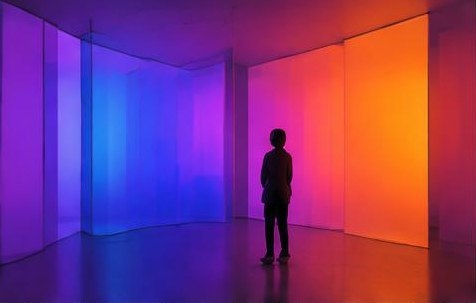
Light as a Spatial Experience: James Turrell’s ‘Aten Reign’ of 2013
James Turrell uses light not merely to make something visible. It becomes the very object of perception. His installation ‘Aten Reign’, developed for New York’s Guggenheim in 2013, transformed the rotunda into an altered space of experience. This historical look back shows why architecture, duration and the viewer’s own position are indispensable to such art.
Discovery article
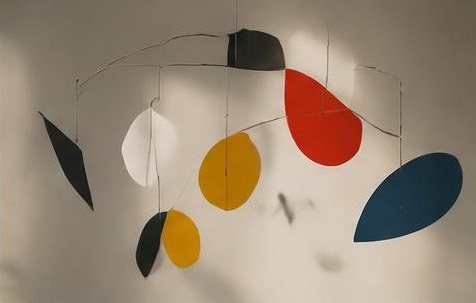
When Movement Becomes Material: Understanding Kinetic Art
A sculpture does not have to stand still. Kinetic art makes movement an essential part of its effect, bringing time, forces and change into the work. There is a wide range of possibilities between motor-driven constructions and mobiles moved by air. What matters is not technical sophistication alone, but the relationship between object, surroundings and viewing.
Discovery article
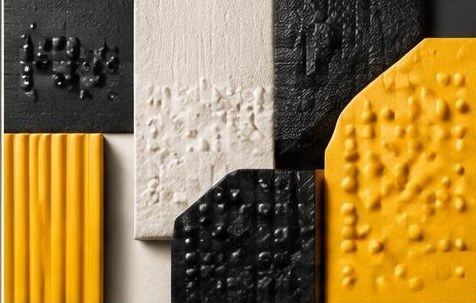
Contrast is not a clash of styles: making accessible design visible
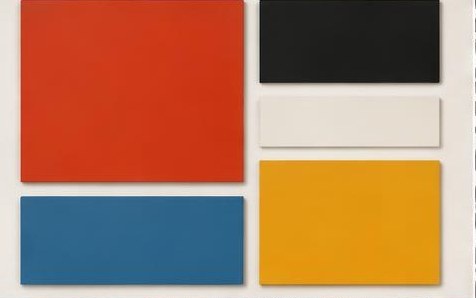
Accessible design does not begin with a particular aesthetic, but with the question of who can perceive and use information. This becomes particularly clear when it comes to contrast. International web standards provide verifiable benchmarks. They do not replace design decisions, but help distinguish decorative restraint from genuine illegibility and develop reliable visual hierarchies.
Discovery article
The page as a playing field: what the New Typography changed
Asymmetrical pages, striking blocks of type and the combination of image and text have long been part of everyday graphic design. In the 1920s and 1930s, however, these devices were fundamentally re-examined. A past MoMA exhibition shows how the New Typography understood design as the organisation of information, with an influence extending far beyond individual posters.
Discovery article
Still Images, Restless Eyes: The Logic of Op Art
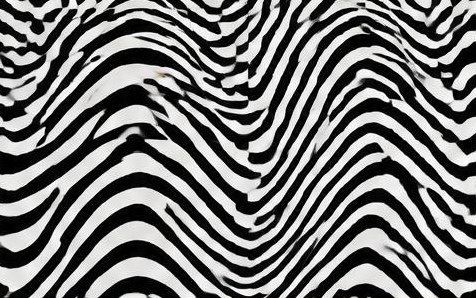
Lines shimmer, planes seem to tilt and rigid patterns create the impression of movement. Op Art reveals that seeing is not a neutral process of recording. Its geometric experiments have a precise place in art history. For contemporary design, they also offer an opportunity to reflect on perception, legibility and the limits of visual intensity.
Discovery article
The Second Form: Repair as Part of Design History
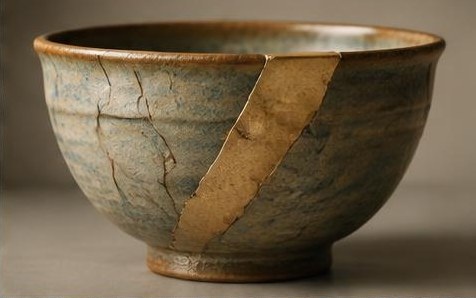
A repaired object tells us about more than damage. It records decisions about what should be preserved and what means were available to do so. Museum collections can make such stories visible. Looking closely reveals, alongside the original design, a second layer of skill, adaptation and appreciation that often receives less attention.
Discovery article
More than Flat Images: What Digital Museum Objects Can Tell Us
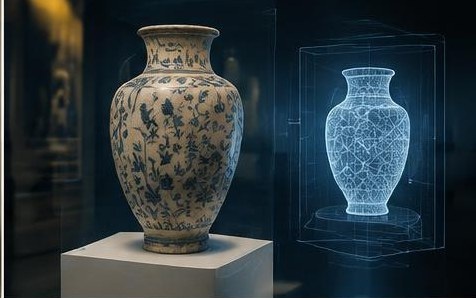
A digital collection can contain more than photographs of paintings. Smithsonian Open Access connects different areas of its collections and also points to three-dimensional content. This broadens the possibilities for education and design. At the same time, it remains important to distinguish carefully between the historical object, its digital recording and a new application developed from it.
Discovery article
Warp, Weft, Insight: Why Weaving Is a School of Design
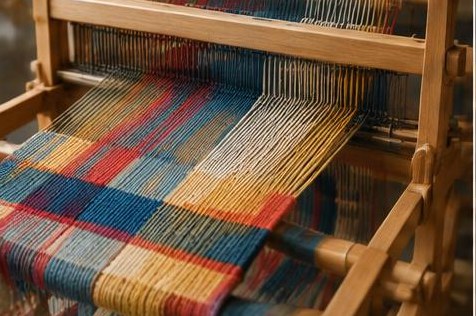
A woven fabric is not simply a surface with a pattern applied to it. Its appearance arises from a structure. Anni Albers described these fundamentals with great clarity. Together with material-based teaching at the Bauhaus, her approach opens up a view of design in which structure, manual action and visible effect belong together from the outset.
Discovery article
The book as a whole: William Morris and the designed page
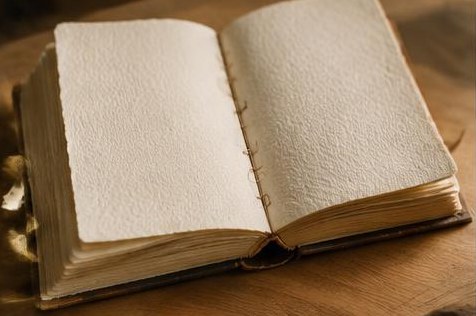
William Morris was interested not only in texts, but also in their visual and material appearance. For him, calligraphy, page decoration and book production formed an interconnected field of work. His engagement with historical models opens up a different perspective on typography from that of later modernism: the focus is not on reduction, but on the interplay of many parts.
Discovery article
Patterns Need Hands: William Morris and Textile Techniques
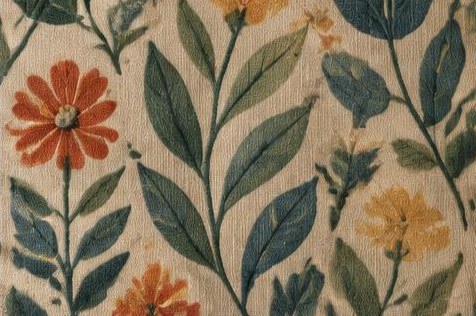
William Morris is known for plant motifs, but his textile work cannot be reduced to decorative drawings. He explored the processes that make particular effects possible in the first place. Embroidery and other techniques connected design with practical experience. This also reveals why textile design should not be discussed solely through the name of a famous designer.
Discovery article
Labels Are Part of Viewing Art: Accessible Digital Interpretation
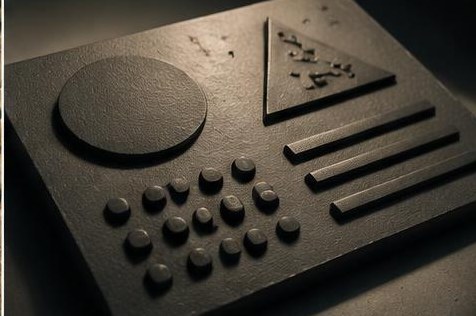
An exhibition can offer objects that visitors may touch and still fall short because its information is difficult to read. Accessible interpretation must therefore consider content, presentation and usability together. Experiences from Cooper Hewitt Labs and W3C recommendations show how adaptable text and clear visual decisions can complement a museum visit without creating unnecessary new barriers.
Discover