
A universe of possibilities
Aevoriana Station
A universe of possibilities · WeltraumFeed · Animals & Nature
Every day, this feed brings together fresh, easy-to-read news from many fields – from science and space to nature and the environment, art, music and good news. New discoveries are added every morning.
Discovery article
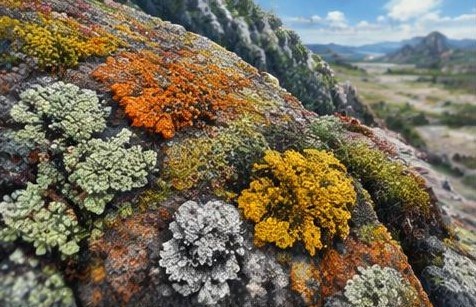
Lichens: small communities on rough surfaces
On tree bark and stones, lichens often look like inconspicuous patches of colour. In fact, they bring fungi together with photosynthetically active partners to form small living communities. Their sensitivity to environmental conditions makes them interesting to observe. Yet neither every lichen nor every change in its growth can be interpreted through a single, simple explanation.
Discovery article
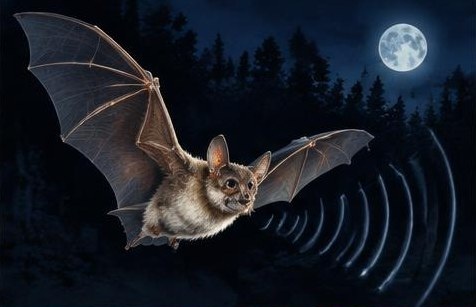
How bats measure the night
For many bats, darkness is not an obstacle that must be overcome through sharper eyesight alone. They use returning echoes of their own calls to perceive their surroundings. Nevertheless, bats are not blind. Their perception combines several senses, and their varied ways of life do not fit the simple image of a single type of nocturnal insect hunter.
Discovery article
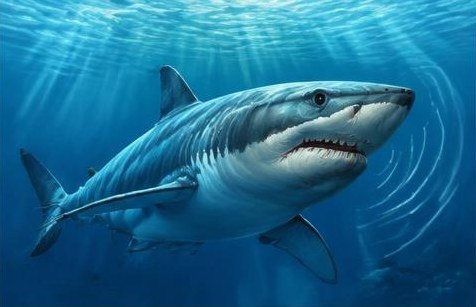
The close-range electrical world of sharks
A prey fish can be hidden yet still leave traces: muscle movements generate weak electric fields. Many sharks detect these signals. Their electrical sense complements smell, hearing and sight, but does not replace them. Understanding this perception therefore means looking more closely at distances, habitats and the diversity of shark species.
Discovery article
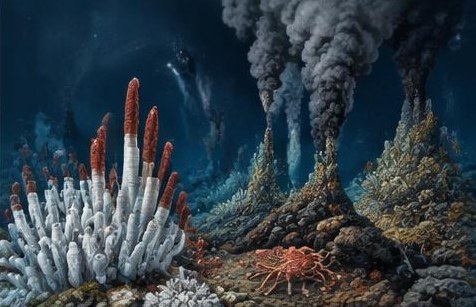
Life at hot vents in the cold ocean
At hydrothermal vents, hot, mineral-rich fluids meet cold seawater. Dense communities of organisms can develop there, with a food base that relies partly on chemical energy rather than directly harnessed solar energy. The animals do not simply live in the hottest water, however. Transition zones, microorganisms and finely balanced relationships with a dynamic environment that is often difficult to access are crucial.
Discovery article
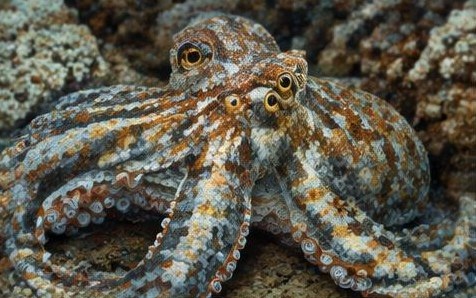
Skin that changes its patterns
Octopuses and other cephalopods can change their appearance remarkably quickly. Pigment cells, reflective structures and, in some species, movable skin projections make this possible. The transformation is neither limitless nor merely decorative. It belongs to a versatile repertoire that allows animals to respond to backgrounds, threats and members of their own species, without requiring human intentions.

Discovery article
Corals can recover – but not indefinitely
White corals are not necessarily already dead. During bleaching, many reef-building corals lose important photosynthetic partners and come under considerable stress. Recovery is possible, but depends on the duration, severity and recurrence of the stress. Resilience therefore does not mean invulnerability, nor does it provide an all-clear for a reef’s future.

Discovery article
A migration spanning several generations
The migration of North American monarch butterflies is not an annual round trip made by the same animals. Particularly in the eastern population, breeding generations alternate with a longer-lived migratory generation. Anyone seeing a monarch again the following summer is therefore usually not encountering a returning butterfly from the previous year. Behind the familiar image of migrating butterflies lies a complex annual cycle.
Discovery article
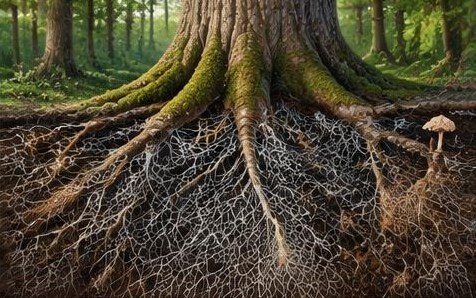
Beneath forest trees: fungal partnerships without the internet myth
Mycorrhizal fungi associate with plant roots and influence their supply of water and nutrients. This is often turned into a story about a caring forest network. Research paints a more cautious picture: exchange and connections are important topics, but far-reaching claims about targeted help between trees are not supported by robust data to the same extent.
Discovery article
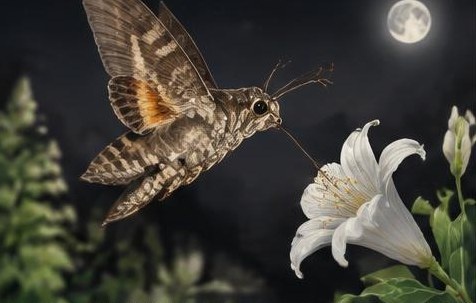
When pollinators arrive after sunset
Pollination does not end with the last daylight. Moths also transfer pollen and can be important visitors to certain plants. A study of brambles in southern England illustrates their significance particularly clearly. It does not, however, establish a general ranking in which moths are inherently better than bees or other insects active during the day.
Discovery article
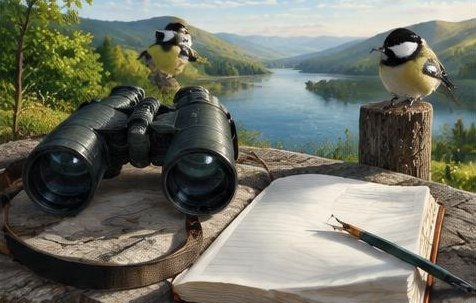
Why an ordinary bird list can be valuable
A rare sighting seems more exciting than repeatedly noting a blackbird. For research, however, regular complete observation lists can be particularly useful. They reveal not only records, but also their relationship to observation effort. Clear information, honest uncertainty and the distinction between not detected and genuinely absent are crucial.
Discovery article
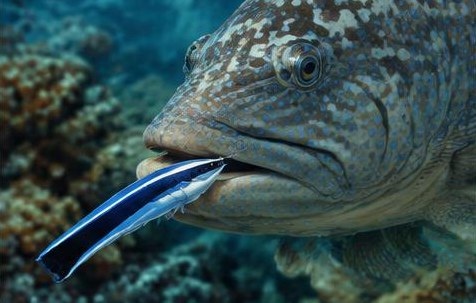
Cleaner fish: cooperation with conditions
On some reefs, large fish allow small cleaners to work on their skin and gills. The cleaners obtain food, while their visitors may lose parasites. This is a vivid example of mutual benefit, but not proof of selfless care. The benefits that arise depend on the species, their behaviour and the particular conditions of the encounter.
Discovery article
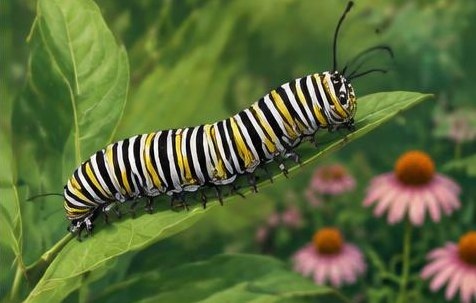
A butterfly garden begins with caterpillars
A butterfly on a flower is easy to spot. Yet the conditions that make its life possible often depend on quite different plants. Many caterpillars can feed only on particular foods, while adults visit nectar sources. Anyone wishing to support butterflies must therefore also incorporate signs of feeding, development periods and inconspicuous refuges into their garden design.

Discovery article
Urban foxes: adaptable, but not without problems
Red foxes use parks, gardens and other urban spaces because they can provide food and cover. Their presence is neither a sign of complete disconnection from nature nor straightforward evidence of particularly healthy urban wildlife. These adaptable animals respond to specific opportunities and risks. Their way of life deserves more attention than the cliché of the cunning neighbour.

Discovery article
What urban gardens reveal about biodiversity
Habitats emerge between buildings that seem small yet can support many species. Their value, however, cannot be judged from a single lively afternoon. Urban ecology combines regular observations with different measurement methods. It is important not just to count conspicuous visitors, but also to consider how habitats are used, seasonal patterns and blind spots.
Discovery article
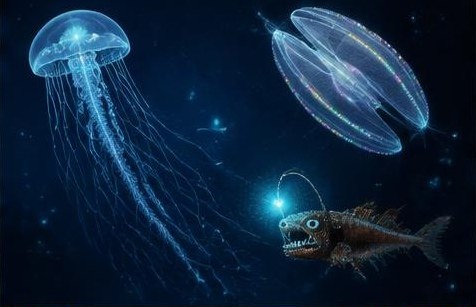
Why the deep sea is not simply dark
Where little sunlight reaches, numerous marine organisms produce their own light or use luminous partners. Bioluminescence can attract prey, confuse predators or alter an organism’s silhouette. The glowing deep sea is therefore no uniform spectacle. Behind similar points of light lie different chemical pathways, ways of life and ecological functions, each of which requires closer investigation.
Discovery article
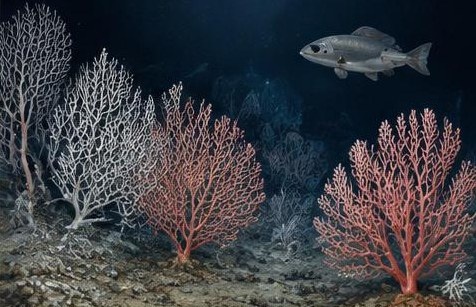
Coral forests beyond sunlight
Corals are not confined to warm, bright, shallow seas. Various species also create spatially complex habitats at great depths. Many feed there on material carried to them, without photosynthetic partners. Their often slow development makes clear why a visible stand can be damaged quickly, while a comparable structure returns only after very long periods.
Discovery article
Deadwood is a habitat in flux
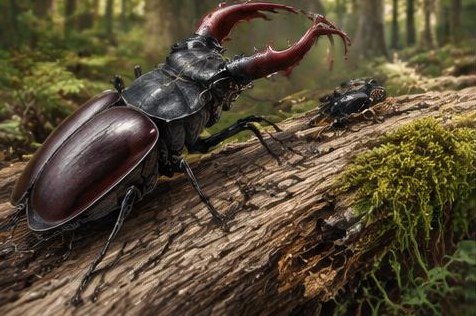
A dead trunk is not simply the end of a tree. As it decomposes, its moisture, structure and nutrient availability change. Fungi, insects and many other organisms make use of different stages in this process. Their diversity therefore depends not only on how much deadwood is present, but also on its form and the periods over which it remains available.
Discovery article
What a mushroom cap reveals about the forest — and what it does not
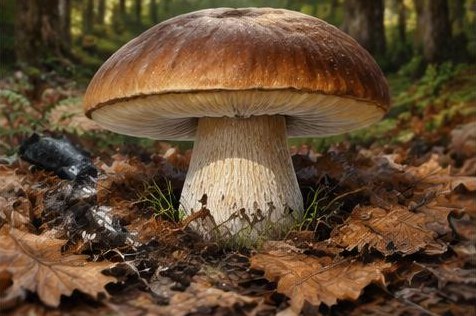
After damp days, fungal fruiting bodies sometimes appear as if from nowhere. Yet most of the organism often remains hidden. Visible caps therefore tell only part of its story. Looking at fungi as part of forest ecology reveals decomposers, root partners and pathogens, without jumping to conclusions about the condition of the entire forest from a single find.
Discovery article
Wild bees need more than a floral buffet
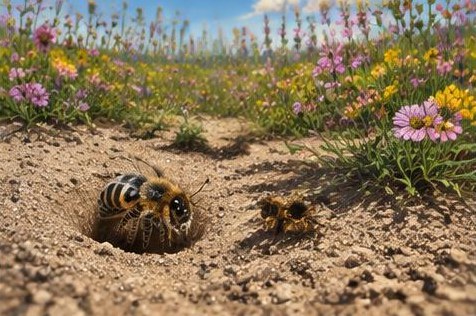
Flowers provide food for wild bees, but that is not enough to meet all their needs. Many species require suitable soil, while others need hollow stems or existing cavities. Anyone wishing to support pollinators should therefore consider their entire life cycle. Inconspicuous, less tidy features can be just as important as colourful summer planting.
Discovery article
Migratory birds follow more than one compass
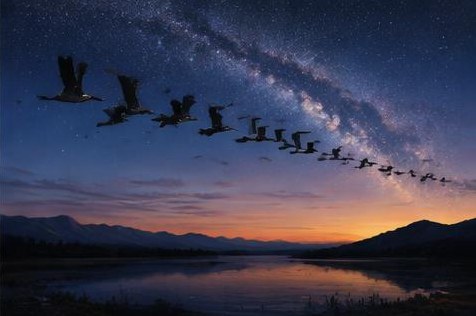
Migratory birds find their way using information from an environment that is constantly changing. The sun, stars, landscape and Earth's magnetic field can all play a part. Which cues a bird uses depends on its species, experience and situation. Researchers therefore distinguish between following a direction and the more demanding task of determining one's own location.
Discover