
A universe of possibilities
Aevoriana Station
A universe of possibilities · WeltraumFeed · Space
Every day, this feed brings together fresh, easy-to-read news from many fields – from science and space to nature and the environment, art, music and good news. New discoveries are added every morning.
Discovery article
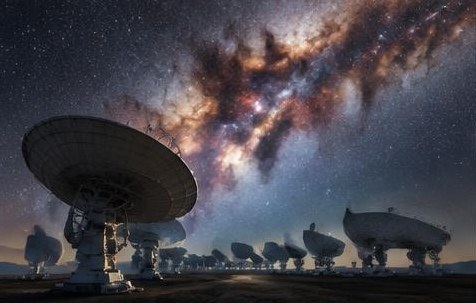
ALMA: How radio telescopes see the cold nurseries of stars
Star-forming regions are often dark in visible light because dust blocks the view. The ALMA observatory studies their millimetre and submillimetre radiation. Its linked antennas reveal cold dust and molecular gas. This makes it possible to explore the regions where stars form and where the raw materials for new planets gather around young stars.
Discovery article
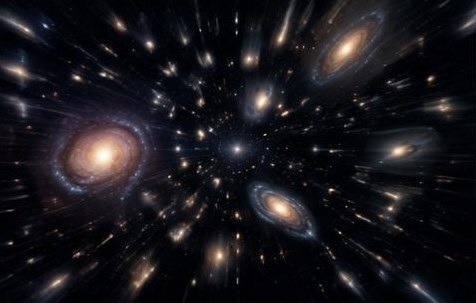
Dark energy: what accelerating expansion really means
Observations indicate that the expansion of the universe is not simply slowing down all the time. On large scales, expansion has accelerated in later cosmic epochs. Dark energy is the term for a possible cause within the standard model. Its nature remains an open question and is being investigated using supernovae, galaxy maps and gravitational lensing.
Discovery article
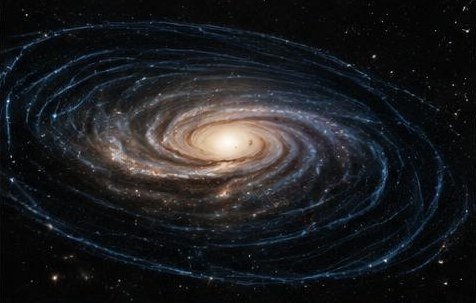
Dark matter: why astronomers infer invisible mass
Dark matter is the name for an as yet unidentified component of matter whose gravitational effects are visible in many places. The movements of galaxies, gravitational lensing and cosmic structures cannot be accounted for by the observed ordinary matter alone. This does not mean that its particles have already been found. Well-measured effects and an unknown nature are two different statements.
Discovery article
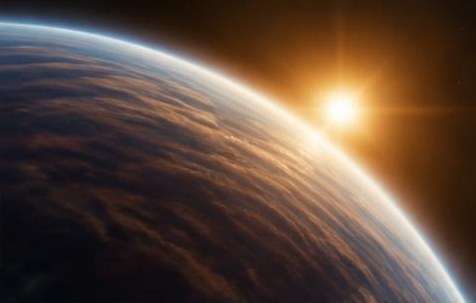
Is this exoplanet habitable? What atmospheres really reveal
An Earth-sized planet is not automatically a second Earth. Its atmosphere, radiation environment and evolutionary history also matter when assessing potentially life-friendly conditions. Telescopes can study selected gases or a planet’s thermal radiation. Such measurements are valuable, but neither a single molecule nor a location in the habitable zone proves habitability or life.
Discovery article
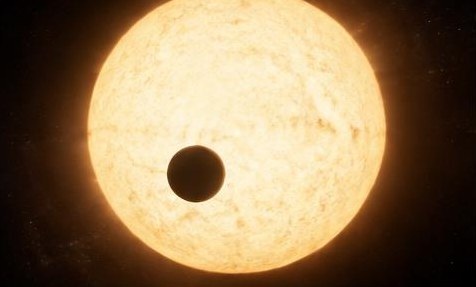
How do we discover exoplanets lost in starlight?
Most exoplanets are not photographed as clearly recognisable worlds. Instead, astronomers measure their effect on their host star: regular dimming, tiny changes in velocity or shifts in position. Each method favours particular types of planet. Only by combining them can a conspicuous signal become a reliable description of size, mass and orbit.
Discovery article
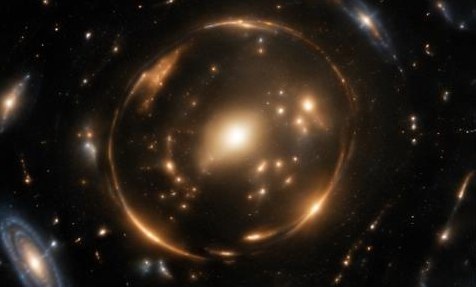
Gravitational lenses: when galaxies bend the light of other galaxies
Large masses alter the paths along which light travels through spacetime. If a galaxy or galaxy cluster lies in front of a distant source, distorted arcs, multiple images or amplified signals can arise. Gravitational lenses are therefore both natural observational aids and tools for measuring matter that emits little or no light of its own.
Discovery article
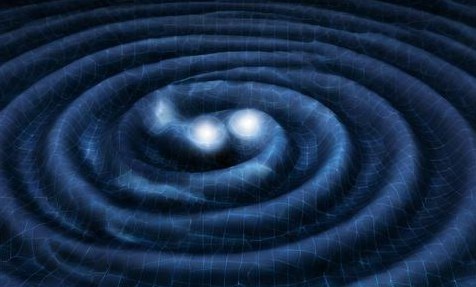
Gravitational waves: how to measure tiny changes in spacetime
Gravitational waves are changes in spacetime that propagate outwards. Particularly strong measurable signals arise when compact objects such as black holes or neutron stars orbit one another and merge. Detectors do not measure ordinary sound waves. They compare light paths with extreme precision, providing access to events that may remain invisible in light.
Discovery article
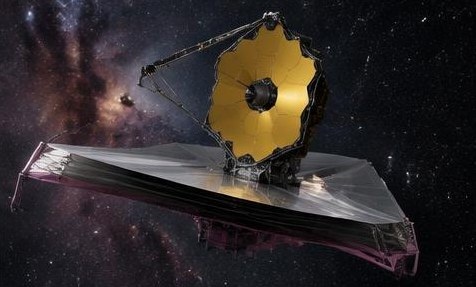
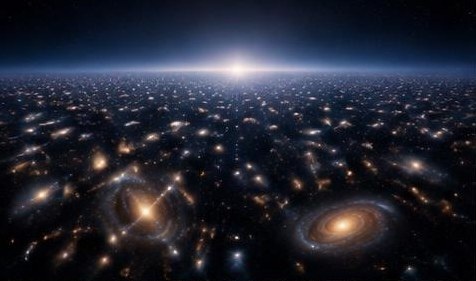
James Webb: Why an infrared telescope tells different stories
The James Webb Space Telescope observes mainly infrared light. It uses this to study distant galaxies, dust-shrouded star formation and the atmospheres of selected exoplanets. Its large mirror is only part of its success. Low instrument temperatures, suitable spectrographs and an observing position from which interfering heat can be effectively screened out are just as important.
Discovery article
Light years, parallaxes, standard candles: how cosmic distances are measured
A light year is a distance, not a measure of time: it corresponds to approximately 9.46 trillion kilometres. But how do we determine distances that no tape measure can span? Astronomers combine geometric measurements with known relationships involving luminosity. This distance scale stretches from nearby stars to distant galaxies, with its own uncertainties at every stage.
Discovery article
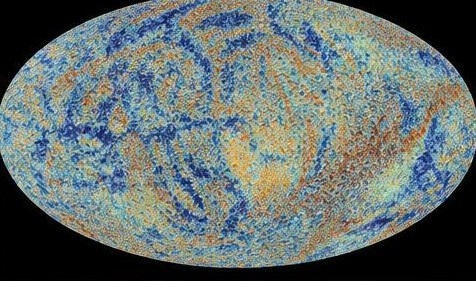
Cosmic background radiation: the oldest light we can see
The cosmic microwave background radiation comes from an epoch when the universe first became largely transparent. Today, its spectrum corresponds to approximately 2.725 kelvin. Tiny differences across the sky contain information about the early density fluctuations. They do not show the Big Bang itself, but an early state of the cosmos, long before the first stars shone.
Discovery article
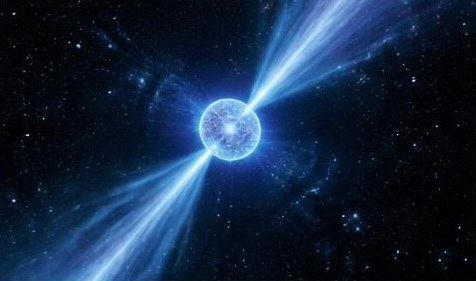
Pulsars: why dead stars flash like cosmic lighthouses
Pulsars are rotating neutron stars whose beams of radiation regularly sweep across our line of sight. Their apparent flashing does not mean that the entire star is constantly switching on and off. Particularly stable pulsars serve as precise timekeepers. Their signals help researchers investigate compact matter, galactic movements and even very slow changes in spacetime.
Discovery article
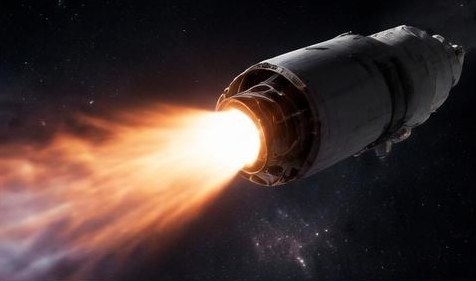
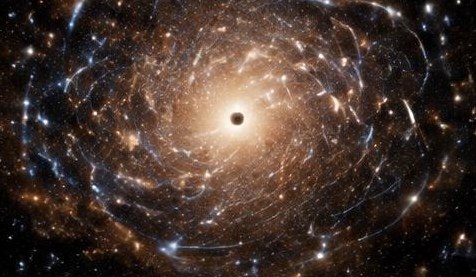
How does a rocket work in the vacuum of space?
A rocket does not need to push against air. It accelerates by expelling mass it carries backwards, thereby gaining momentum in the opposite direction. This principle also works in a vacuum. During a launch into orbit, building up a very high sideways velocity is usually harder than simply gaining altitude.
Discovery article
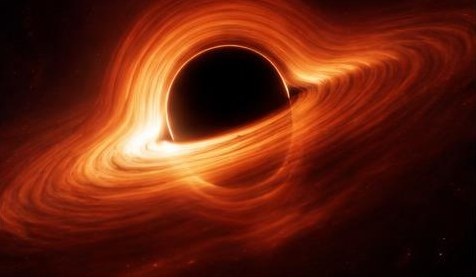
Sagittarius A*: how stellar orbits measure the centre of the Milky Way
At the centre of the Milky Way lies Sagittarius A*, a supermassive black hole with approximately four million solar masses. The principal means of determining its mass came not from a look inside, but from the motion of nearby stars. Their orbits also make the galactic centre an exceptional testing ground for gravity.
Discovery article
Black holes: what the event horizon is — and what it is not
A black hole is not an ordinary sphere with a solid surface. Its event horizon bounds a region from which signals can no longer escape. Yet its surroundings can still be studied. Orbiting stars, hot gas and gravitational waves provide different information about mass, motion and extreme spacetime.
Discovery article
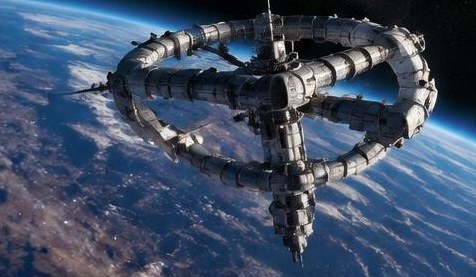
Weightlessness: why space stations fall without crashing
Astronauts do not float because there is no gravity in Earth orbit. Together with their space station, they are in free fall. Their high sideways velocity ensures that they continually miss Earth. This principle also explains why temporary weightlessness is possible in drop towers and research rockets.
Discovery article
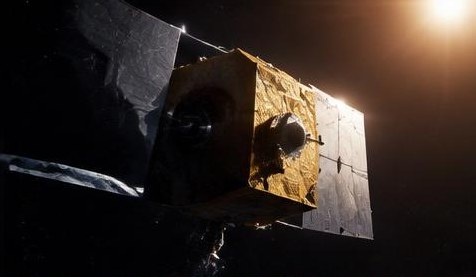
Temperatures in space: why space is not simply cold
There is no single temperature in space. The cosmic background radiation corresponds to about 2.7 kelvin, while sunlit components can become hot and shielded surfaces very cold. Anyone asking about the temperature of space therefore needs to distinguish between radiation, tenuous gas and a specific object in a vacuum.
Discovery article
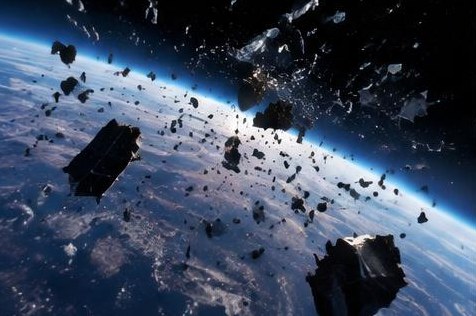
Space debris: why small fragments cause big problems
Space debris consists of defunct satellites, rocket remnants and fragments. The danger lies not only in their quantity, but above all in their high speed. Even small pieces can damage active spacecraft. The so-called Kessler effect describes the possibility that collisions generate further debris, making individual orbital regions increasingly difficult to use over the long term.
Discovery article
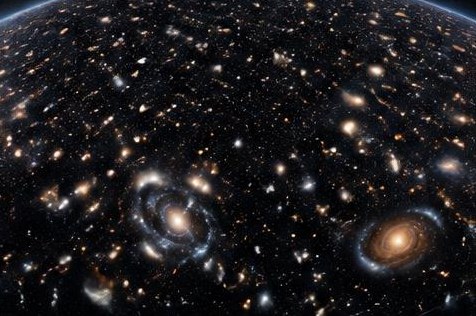
How big is space? What we can measure – and what we cannot
The observable universe has a diameter of approximately 93 billion light-years. That does not mean that space as a whole is the same size. The crucial distinction is between an observational limit and an actual edge. Cosmic expansion explains why we can see further than the age of the universe might initially suggest.
Discovery article
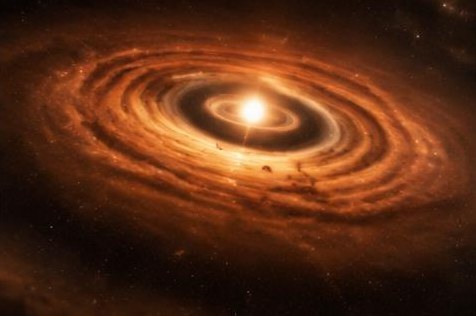
How dust becomes planets: The difficult steps in between
Planets grow in the discs of gas and dust surrounding young stars. Tiny grains must first develop into larger bodies before gravity can substantially accelerate their growth. The transitions between these size ranges are particularly challenging. Observed rings, theoretical models and the diversity of known planetary systems provide different clues.
Discovery article
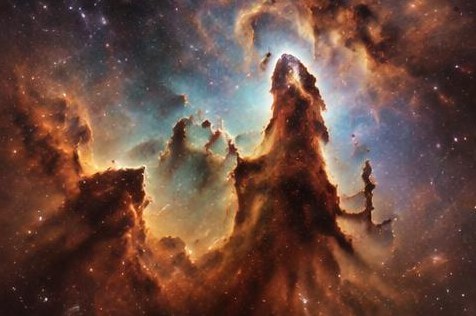
How do stars form? From cold gas to a glowing fusion reactor
Stars form when parts of cold gas clouds become denser under their own gravity. But collapse alone does not explain the entire process. Turbulence, magnetic fields, rotation and radiation from young stars influence how much material gathers together. Only when temperatures inside are sufficiently high does hydrogen fusion begin to provide a sustained source of energy.
Knowledge & Space
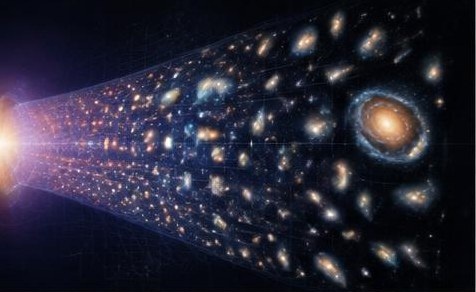
The Growing Universe: Size, Age, and Expansion
The universe is about 13.8 billion years old—and the region observable today is roughly 93 billion light-years across. This apparent contradiction takes us straight into modern cosmology: light travels through space that changes along the way.
Knowledge & Space
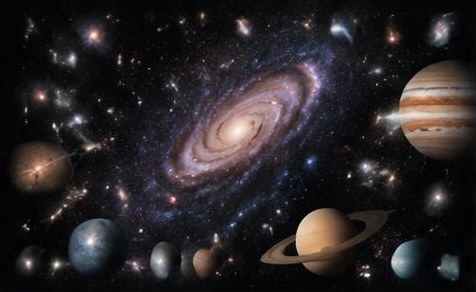
Galaxies, Stars, and Planets: A Universe Without a Complete Inventory
Hundreds of billions of galaxies and unimaginably many stars: the scales are fascinating, but no complete cosmic inventory exists. The crucial distinction is between what is counted, what is extrapolated, and what is merely assumed.
Knowledge & Space
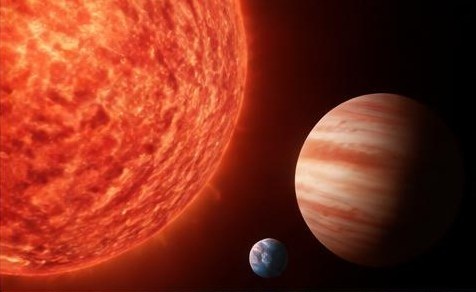
Cosmic Giants: Large Planets and Stars Compared with Earth
A planet roughly 21 Earth diameters across and a star with a radius of approximately 2,000 solar radii: cosmic size records exceed our everyday experience. But “larger” can refer to radius, volume, or mass—and rankings are by no means definitive.
Knowledge & Space
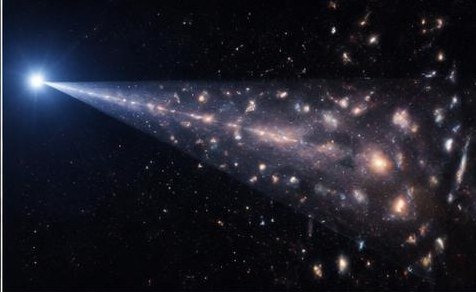
A Light-Year: A Distance That Challenges Our Imagination
A light-year is not a span of time, but approximately 9.46 trillion kilometers. The unit connects distances with the travel time of light—and explains why looking at the stars always also means looking into the past.
Knowledge & Space
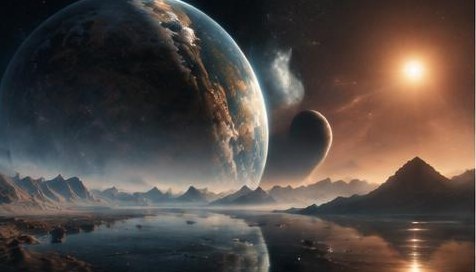
Life in the Universe: Many Possibilities, No Credible Overall Percentage
Planets are common. We do not yet know whether life also arises frequently. An interesting exoplanet, a possible biosignature, and a technological civilization involve different questions—and very different uncertainties.
Knowledge & Space
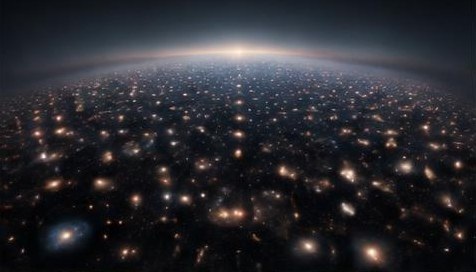
Beyond Our Horizon: Does the Universe End Somewhere?
The limit of what we can observe is not automatically the boundary of the universe. The question of an “outside” encompasses several different ideas: more space, a finite universe without an edge, or a hypothetical multiverse.
Knowledge & Space
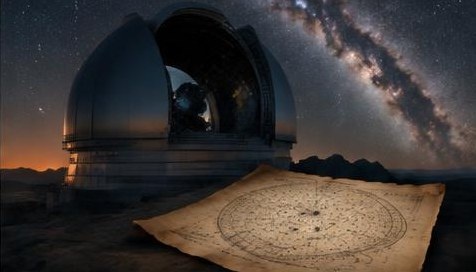
Astrology and Astronomy: Shared Roots, Different Standards
People have observed and interpreted the sky for thousands of years. Astronomy and astrology share part of their history, but today their methods differ fundamentally: personal meaning is not the same as a testable prediction.
Knowledge & Space
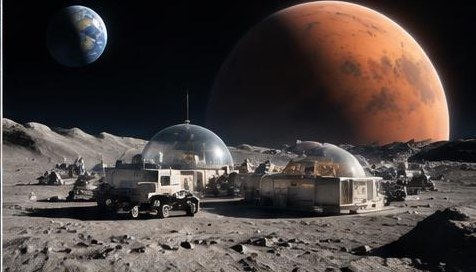
Living on the Moon and Mars: From Visits to an Independent Settlement
Technology can enable humans to survive in hostile environments. But a short mission, a permanently inhabited outpost, and a self-sufficient city are three entirely different goals. The Moon and Mars illustrate how much separates a vision from dependable everyday life.
Knowledge & Space
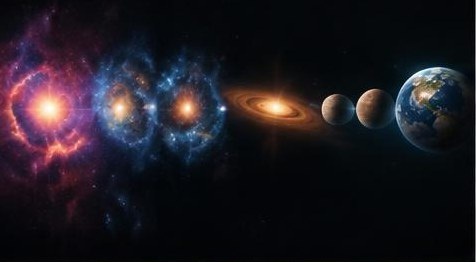
A Journey Through Cosmic Time: The Universe, Sun, Earth, Moon, and Humanity
13.8 billion years of cosmic history, 4.6 billion years for the Sun, and around 300,000 years for Homo sapiens: only by comparing these timescales can we see how young our own species is relative to its surroundings.
Knowledge & Space
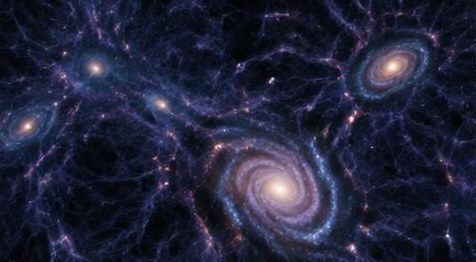
The Invisible Universe: Dark Matter and Dark Energy
Stars and planets make up only a small part of the cosmic matter–energy budget. Dark matter and dark energy describe different unresolved problems—and “dark” here means above all that their fundamental nature remains unknown.
Knowledge & Space
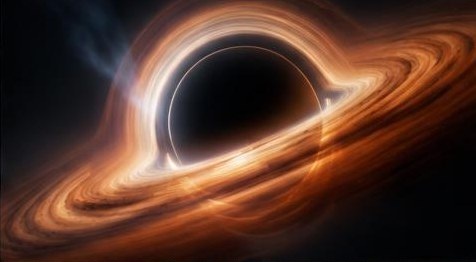
Black Holes: Extreme Gravity, Not Cosmic Vacuum Cleaners
A black hole is not a hole in solid ground or a vacuum cleaner that sweeps up the entire universe. It is a region of spacetime with a special boundary: no light can escape outward from inside the event horizon.
Discover