
A universe of possibilities
Aevoriana Station
A universe of possibilities · WeltraumFeed · Good News
Every day, this feed brings together fresh, easy-to-read news from many fields – from science and space to nature and the environment, art, music and good news. New discoveries are added every morning.
Discovery article
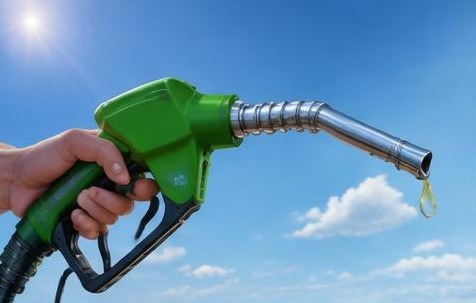
One less pollutant in the tank: The worldwide end of leaded petrol for cars
An everyday source of lead exposure has disappeared worldwide: leaded petrol for cars has no longer been sold since July 2021. This success came through technical changes and a long-standing international partnership. It removes neither existing contamination nor every source of lead, but shows how an avoidable environmental burden can be systematically brought to an end.
Discovery article
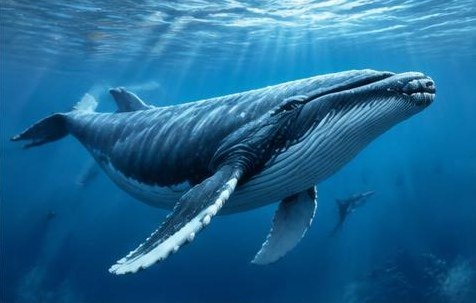
Humpback whales: a historic conservation success that needs a regional perspective
Several humpback whale populations have recovered significantly since intensive hunting ended. In 2016, the US ocean agency NOAA was able to remove nine of fourteen distinct populations from its special threatened-species list. This was a significant milestone, but not a global all-clear: other populations remained threatened, and new pressures still need to be monitored.
Discovery article
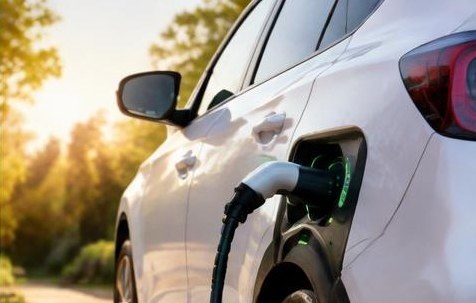
More electric cars, less demand for oil: A measurable shift with limits
Electric cars have long been more than a small niche market. For 2024, the International Energy Agency documents more than 17 million sales and a growing vehicle fleet. Particularly telling is the oil consumption already displaced. At the same time, raw material requirements, the source of electricity and the still-large number of conventional cars remain important parts of an honest environmental assessment.
Discovery article
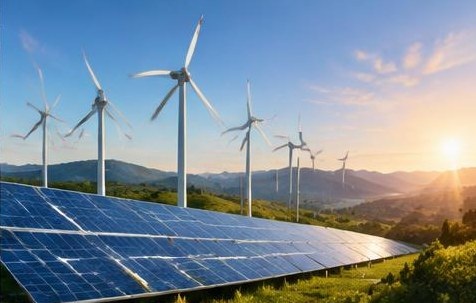
585 gigawatts more: Renewable electricity generation is growing on a new scale
The expansion of renewable electricity generation reached a documented record in 2024. Worldwide, 585 gigawatts of capacity were added, reports the International Renewable Energy Agency. The figures show technological and economic momentum. They do not, however, mean that an equivalent amount of electricity was generated or that all regions of the world benefit equally from the expansion.

Discovery article
Having an account of one's own is becoming more common – and opening up new possibilities
Between 2011 and 2021, the proportion of adults worldwide with a financial account rose from 51 to 76 per cent. The World Bank also documents a smaller gender gap in developing countries. Accounts and mobile money services can make everyday life and economic independence easier. Their mere existence, however, proves neither financial security nor fair terms.

Discovery article
Small foxes, major recovery: what was achieved on California’s islands
Several subspecies of the Californian island fox recovered from dramatic declines within a comparatively short time. Conservation programmes combined population rebuilding with the reduction of specific threats. The case shows how effective targeted ecological repair can be. Small island populations remain vulnerable, however, and need reliable monitoring even after recovery.
Discovery article
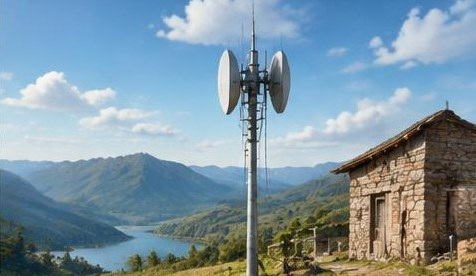
227 million additional internet users: more access, but not yet equal participation
The International Telecommunication Union estimated that there were 5.5 billion internet users worldwide in 2024. Compared with the revised figure for the previous year, this was an increase of 227 million people. Digital information and learning resources are therefore reaching more people. However, the differences between poor and rich countries remain large, and an occasional connection is not yet reliable, affordable access.

Discovery article
Fewer child marriages: a slow but measurable gain in life opportunities
The proportion of young women worldwide who were married as children has fallen. UNICEF documented a decline from almost a quarter to about a fifth within a decade. The progress is real, but unevenly distributed. The most disadvantaged girls are often left behind, and the pace is nowhere near sufficient.

Discovery article
More girls are learning for longer: progress beyond enrolment
In 2023, UNESCO documented around 50 million more girls enrolled in school than in 2015. Even more telling is that completion rates also rose. Educational opportunities are thus improving measurably. However, global progress masks substantial differences between regions and social groups, and a school place does not yet guarantee good teaching or successful completion.

Discovery article
Does conservation work? A large-scale assessment offers an encouraging answer
Individual success stories are welcome, but they do not yet answer a fundamental question. A meta-analysis published in 2024 systematically compared conservation measures with situations without corresponding interventions. In two-thirds of the cases examined, biodiversity improved or its decline slowed. This is no guarantee of success, but it is strong evidence that action can be effective.

Discovery article
Nepal’s tiger population is growing — and so is the task of being good neighbours
In 2022, Nepal recorded almost three times as many wild tigers as in 2009. Protected habitats, connected landscapes and collaboration with communities underpin this success. The development is encouraging, but calls for a second measure of success: people living alongside tigers must also be safe and able to benefit from conservation.

Discovery article
Open science gains a shared foundation
Research should not only be produced, but also be accessible, verifiable and usable. An internationally agreed framework and a global stocktake have given open science a stronger shared foundation. For now, the progress lies in collaboration and systematic monitoring. Whether it leads to more equitable research still depends on practical implementation.
Discovery article
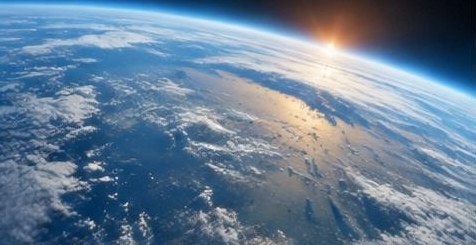
The ozone layer is recovering: What decades of cooperation can achieve
Can an environmental system damaged on a global scale recover? The ozone layer provides robust evidence that it can. Almost all controlled ozone-depleting substances have been phased out of use. Measurements and modelling show progress, although full recovery will still take decades and individual years can deviate markedly from the long-term trend.

Discovery article
The Iberian lynx is reclaiming its habitat and its future
From the brink of extinction to a much larger population: the Iberian lynx is one of conservation’s well-documented successes. Breeding, reintroduction and habitat work went hand in hand. Its improved Red List classification is deserved, but does not mean that this rare cat species is already safe without further support.

Discovery article
Collectively funded access: how SCOAP3 opens up specialist knowledge
More than 3,000 institutions support a partnership that makes particle physics research accessible without fees for readers or authors. To mark its tenth anniversary, SCOAP3 documented tens of thousands of published articles. The model demonstrates a practical route to the collective provision of knowledge, but remains dependent on a particular research field and reliable funding.
Discovery article
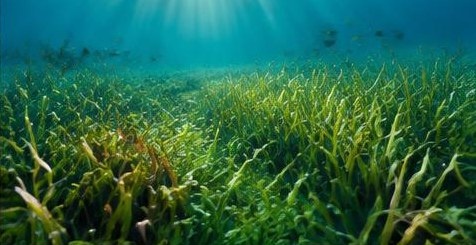
Millions of seeds brought seagrass meadows back
On Virginia’s coast, a long-term project shows that lost underwater landscapes can return. Researchers documented 3,612 hectares of restored seagrass and the return of important ecological functions. Suitable site conditions and perseverance were crucial. The success therefore offers valuable guidance, but is not evidence that sowing seeds automatically works everywhere.

Discovery article
More people with electricity: Access is growing faster than the population
Electricity enables lighting, communication and many everyday work processes. For 2023, the international energy progress report documents a further increase: around 92 per cent of the world's population had basic access to electricity. The number of people without a supply fell. But a connection alone guarantees neither affordable electricity nor a reliable round-the-clock supply.

Discovery article
More households safely supplied: why drinking water quality matters
International monitoring documents long-term progress in access to drinking water and sanitation. Particularly important is the stricter focus on safe provision rather than provision that merely exists. The data also show how large the remaining gaps are. For women and girls, a reliable connection can also considerably ease the burden of everyday life.

Discovery article
Forest loss has slowed — why this progress needs to be read correctly
The long-term global rate of forest loss has fallen. This is documented by the Food and Agriculture Organization’s global forest assessment for the period up to 2020. The trend shows that losses can be influenced. However, it means neither an end to deforestation nor a full recovery of natural forests, their biodiversity and their ecological functions.

Discovery article
Bald eagles: a recovery that can be counted and checked
The bald eagle represents a remarkable resurgence of a species once under severe pressure. An American population assessment estimated around 316,700 birds in the contiguous United States. Behind such figures lie surveys and statistical models. Putting them carefully into context makes the success more credible than any account of nature having been completely saved.
Discover